Leaving your key in the lock overnight may block entry for family or emergency services, especially with certain lock types. Firefighters and locksmiths explain why this common habit can become a serious risk in urgent situations—and what you should do instead.
When every second counts in an emergency, a small household habit can make a critical difference. Firefighter and safety advocate Rubén (@rubfitpro) has raised the alarm about the risks of leaving your key inserted in the door lock overnight—a practice that, depending on your lock type, could prevent family members or emergency responders from entering quickly if disaster strikes.
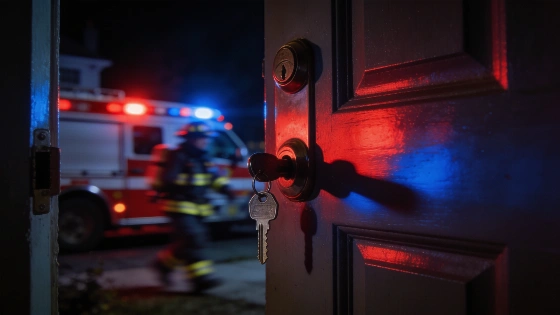
Locking your door before bed is not the issue. The real danger arises when the key remains inside and turned in a standard single-clutch cylinder. In these common locks, a key left on the inside can block the mechanism, making it impossible to open the door from the outside with a spare key. According to Rubén, this seemingly harmless habit can have serious consequences during a fire, gas leak, or medical emergency, when rapid access is essential.
How a Key in the Lock Blocks Rescue
In urgent situations, emergency teams often try to reach a neighbor or relative with a spare key to avoid breaking down the door. This approach is faster and less destructive than forced entry. But if a key is left in the lock on the inside, even someone with a copy cannot open the door from outside. Firefighters, police, or paramedics are then forced to use more time-consuming and damaging methods to gain entry.
This delay can be especially dangerous if someone inside is unconscious, has limited mobility, or if children are alone and unable to open the door. Veteran locksmiths echo these concerns, noting that the habit of leaving the key in the lock complicates access for both families and emergency crews during falls or sudden health crises.
Lock Types Matter
Not all locks react the same way. In single-clutch cylinders, a key left inside can completely block the mechanism. Even a slight movement of the interior key may prevent the lock from turning from the outside, as noted by insurance provider Allianz. Simply leaving the key partially inserted does not guarantee that a spare will work from the other side.
Importantly, keeping the key in the lock does not transform a basic lock into a high-security system. The real resistance to forced entry depends on the quality of the cylinder, protective shield, door construction, and anti-burglary features—not on whether a key is left inside.
Where to Keep Your Keys at Night
Experts recommend locking your door and then removing the key from the cylinder. The safest approach is to place the key in a fixed, easily accessible spot known to all household members, but out of reach from the outside. This ensures you can find it quickly if you need to evacuate, but it won't block entry for others in an emergency.
Guidance from Protección Civil de Castilla-La Mancha also advises that, if a fire breaks out inside the home, residents should grab their keys and close the front door behind them—without locking it—when leaving. This helps contain the fire while allowing emergency teams to enter if needed.
Double-Clutch Cylinders: A Safer Option
For those who prefer to keep a key in the lock, upgrading to a double-clutch (or emergency function) cylinder is a safer alternative. These locks allow the door to be opened from the outside with a spare key, even if another key is inserted inside. However, it's important to confirm this feature with the door open or consult a professional locksmith, as not all locks offer this function. The anti-burglary effectiveness of a lock still depends on its overall design and quality.
Emergency Access and Broader Safety Concerns
Spain's emergency services have repeatedly highlighted the importance of quick access in crisis situations. As the number of incidents requiring urgent intervention rises, the ability to enter a home without delay can be the difference between life and death. This challenge is not limited to fire or medical emergencies; as reported in a recent article on the growing strain faced by the Guardia Civil in responding to V16 emergency beacon alerts, limited resources and access issues can slow down critical response times across the country.
Ultimately, a simple change in nightly routine—removing the key from the lock and keeping it in a known, accessible place—can help ensure that help arrives as quickly as possible when it matters most.