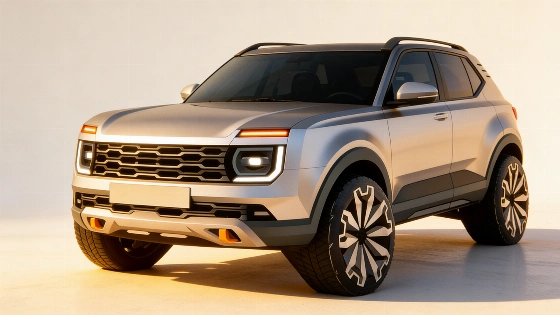
Lada Niva Returns: New Design and Old Engines. Lada is preparing an update for the Niva: patent images reveal a more robust body, but the technical base has remained largely unchanged. The SUV's new look draws comparisons to the Dacia Duster, while the launch date remains uncertain.
Patent images registered in Russia in December 2025 give a clear first look at what the next Lada Niva will be like. Judging by these materials, the iconic SUV will get a noticeably bigger and more modern body, while retaining the recognizable features familiar to fans of the model since the late 1970s.
The look of the new Niva has shifted closer to modern global SUVs: enlarged black fender flares, robust roof rails, LED lights, and a bulky rear bumper. At the same time, the front end has changed little—dark grille, orange turn signals, with only minor touches to the headlights and bumper design. This approach highlights continuity but is clearly aimed at a younger audience and global trends.
Platform and technology
Despite the new body, the technical foundation remains the same. According to available data, Lada does not plan radical changes under the hood: the lineup will retain the familiar 1.6- and 1.8-liter gasoline engines. This decision is explained by stable demand for proven powertrains and the brand’s conservative policy—the previous Niva generations hardly changed for decades.
The new Niva project was initially developed in cooperation with Renault and was supposed to use the CMF-B platform that underpins modern Dacia models. However, after ties with the French group were severed due to events in Ukraine, Lada reportedly decided to switch to its own Vesta architecture, which may affect the launch timing and costs.
Resemblance to Dacia Duster
The exterior of the new Niva draws direct associations with the Dacia Duster—this is evident from the body proportions, the shape of the side lines, and even the details at the rear. Such resemblance is not surprising: the T-134 project began during the period when Lada was part of the Renault alliance, and many solutions were developed jointly. Now, after exiting the group, the Russian brand seeks to maintain its recognizability but is forced to refine the model independently.
Parallels between Russian and European SUVs are becoming increasingly apparent—as experts note, the mass SUV market is moving towards unification. These trends were already discussed in materials comparing the Volkswagen Golf and Hyundai i30 on the Spanish market, where global tendencies increasingly influence local preferences in the competition for the buyer.
Timelines and prospects
Lada does not disclose the exact launch dates for the new Niva. According to unofficial sources, the launch could take place within the next two years, but the project has already been frozen and restarted several times. In 2026, the related Lada Azimut will enter the market on the Vesta platform, while a fully new generation of Niva is expected no earlier than 2028. Final decisions regarding trims and sales markets have not yet been announced.
Moving towards a more modern design while retaining proven technology is Lada’s attempt to hold its ground in a segment where competition is intensifying. For brand enthusiasts, this is a chance to see a legend in a new look, and for the market, it is an indicator of how the Russian automotive industry is adapting to new circumstances.