Iranian Diaspora in Los Angeles Protests Against National Team at 2026 World Cup Opener. Around 200 Iranians in Los Angeles staged a protest against the regime and Iran's national team. The demonstration coincided with the team's debut at the 2026 World Cup. Participants called for change and voiced their discontent with FIFA's bans.
In Los Angeles, home to one of the largest Iranian diasporas outside Iran, around 200 people gathered outside the stadium on the day of Iran’s first match at the 2026 FIFA World Cup. The protest coincided with the game against New Zealand and was not only an expression of discontent with Tehran’s policies, but also a demonstration of alienation from the national team, which many participants referred to as “not their own.”
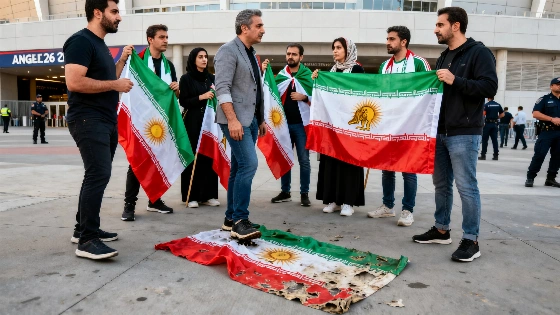
Protesters carried flags depicting a sun and lion — symbols of Iran before the 1979 Islamic Revolution. FIFA banned these flags from being brought into the stadium, a decision confirmed by a Los Angeles court on the day of the match. Despite the ban, some of the symbols still appeared in the stands, provoking mixed reactions: some applauded, while others booed the players.
Many participants, including residents of Orange County, openly showed contempt for the official Iranian flag, demonstratively trampling it at the stadium entrance. Instead of supporting the national team, they called for a return to the previous government and urged the US, especially Donald Trump, not to negotiate with the current Iranian leadership. Some held posters with photos of deceased compatriots and chanted slogans about democracy and change.
According to one of the participants, for many Iranians in the US, football became just a pretext for protest: they do not consider the current national team their own, and see true heroes among imprisoned and fallen opposition members. Old anthems played in the fan zone, and MIGA — “Make Iran Great Again” — could be seen on headgear.
Some protesters, as noted by local media, didn’t have tickets to the match and didn’t plan to watch the game. Half an hour before kickoff, most moved to the stadium perimeter to continue the demonstration. At that time, the Iranian national team was holding training camp in Tijuana, already on Mexican territory, without any contact with the diaspora.
Among the participants were those with mixed feelings: on the one hand, they do not support the current team, but on the other, they acknowledge that football remains an important part of national identity. Some noted that even a victory by the team would bring no joy as long as the situation in the country remains unchanged.
The context of the situation highlights that Los Angeles has long become a center of Iranian emigration, and certain areas of the city are even called 'Tehrangeles.' Such rallies are common among the local community, which responds actively to events in their homeland. It is important to note that protests by Iranians abroad are often accompanied by debates over symbols and bans, as seen at other major events, for example, at the archival document exhibition in Alicante, where the role of national identity was also discussed (more on the diaspora's cultural initiatives).
For reference: FIFA traditionally prohibits political symbols in stadiums, and disputes over Iranian flags and anthems regularly become the subject of investigations at international tournaments. Los Angeles, which will host matches of the 2026 World Cup, remains one of the key venues for the Iranian diaspora to express their views, highlighting the city's importance for discussions about Iran's future and its national identity.