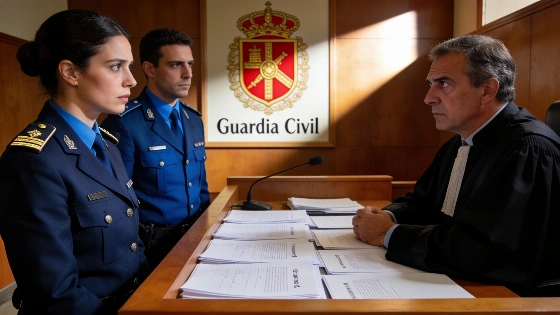
Judge Santiago Pedraz has summoned Leonardo Marcos, former Guardia Civil director, as a suspect in the Leire Díez case. The move follows a request from the PP, intensifying scrutiny on alleged efforts to influence judicial proceedings.
The National Court has taken a decisive step in the ongoing Leire Díez investigation, with Judge Santiago Pedraz formally charging Leonardo Marcos, who served as director of the Guardia Civil under Pedro Sánchez’s government from June 2023 to September 2024. This development comes after the Partido Popular, acting as the lead popular prosecution, requested his summons in the high-profile case.
The case centers on suspicions that Leire Díez, a former PSOE member, and Santos Cerdán, ex-Organization Secretary of the PSOE, orchestrated a scheme to disrupt judicial processes affecting the party and the government. The investigation has already led to charges against several senior figures, including Mercedes González, who succeeded Marcos as head of the Guardia Civil, and Lieutenant General Manuel Llamas, the institution’s deputy operational director.
According to the court order issued on Wednesday, Marcos is scheduled to appear before the judge at 10:00 a.m. on September 10. The day before, Ana María Fuentes, the PSOE’s general manager and another suspect in the case, is set to be questioned. These back-to-back hearings signal a renewed judicial focus on the party after the traditional August recess, adding pressure to the PSOE’s leadership as the legal calendar resumes.
The Leire Díez case has drawn significant attention due to its potential implications for Spain’s political landscape. The investigation examines whether key PSOE figures attempted to manipulate or destabilize court proceedings linked to the party. The involvement of high-ranking officials from the Guardia Civil and the party’s organizational structure has intensified scrutiny, with each new summons amplifying the stakes for those involved.
This is not the first time the National Court has been at the center of politically sensitive investigations. In a related context, the court previously heard testimony from PSOE staff regarding authorizations allegedly granted by Santos Cerdán to Leire Díez, a detail that further complicated the party’s legal challenges. For more on the background and earlier testimonies in this judicial saga, see the report on PSOE staff statements about Cerdán’s authorizations for Díez.
Spain’s legal system allows for popular accusations, enabling political parties like the PP to play an active role in high-profile cases. The National Court (Audiencia Nacional) often handles matters involving alleged corruption or political interference, reflecting the country’s commitment to judicial oversight of public officials. The outcome of the Leire Díez case could have lasting effects on the relationship between political parties and the judiciary, especially as it involves figures from both law enforcement and party leadership. The next hearings in September are expected to clarify the extent of the alleged scheme and determine the legal responsibilities of those charged.