Judge Santiago Pedraz has summoned ex-Guardia Civil director Leonardo Marcos as a suspect in the 'Cloacas' case. The investigation centers on alleged efforts to hinder judicial cases affecting the PSOE and the government.
Judge Santiago Pedraz of Spain's National Court has formally named Leonardo Marcos, former director of the Guardia Civil, as a suspect in the ongoing 'Cloacas' investigation. The case focuses on alleged coordinated attempts within the Guardia Civil to obstruct judicial proceedings that could negatively impact the PSOE and the current government. Marcos is scheduled to appear before the court on September 10, joining a list of high-ranking officials already under scrutiny.
The decision follows a request from the popular prosecution, led by the Partido Popular (PP), which highlighted claims from former UCO officials that Marcos exerted pressure on the unit to halt an investigation involving David Sánchez, the brother of Prime Minister Pedro Sánchez. According to the prosecution, these actions may constitute both malfeasance and obstruction of justice, as they allegedly went beyond standard hierarchical oversight.
Current Guardia Civil director Mercedes González and her deputy, Manuel Llamas, have already testified before Judge Pedraz. The prosecution argues that the timeline of internal communications, the opening of confidential inquiries, and instructions given to the UCO suggest a coordinated effort at the highest levels of the institution. The period under review spans from June 2023 to September 2024, when Marcos held the top post.
In the same court order, Judge Pedraz has also summoned José Luis Alonso Tejuca, chief prosecutor of Badajoz, to testify as a witness. This move aims to clarify the handling of a complaint filed with the Badajoz prosecutor's office against Leire Díez, a key figure in the case accused of orchestrating efforts to undermine judicial investigations. The complaint, which related to actions against Judge Beatriz Biedma—who was investigating the prime minister's brother—was ultimately dismissed, prompting further questions about prosecutorial conduct.
The court has requested the Badajoz provincial prosecutor's office and the State Attorney General's Office to provide the complete file on the complaint against Leire Díez. This includes all communications between prosecutors and officials involved in the case. The investigation is also examining the role of Diego Villafañe, then deputy to the State Attorney General, who reportedly sent specific instructions regarding the procedural handling and recommended closure of the complaint.
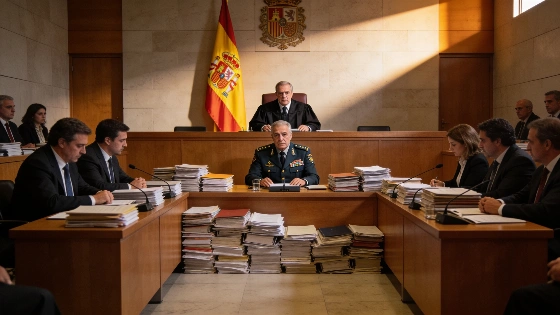
This latest development comes amid heightened attention to judicial interference cases in Spain. Notably, the National Court recently concluded the high-profile Kitchen case, which also involved allegations of political meddling in police investigations. For context, the Kitchen case trial in Madrid ended after 37 sessions, with former officials facing charges related to espionage and obstruction.
The 'Cloacas' case underscores ongoing concerns about the independence of law enforcement and the judiciary in Spain. The outcome of these proceedings could have significant implications for the relationship between political power and judicial processes, especially as the country continues to grapple with high-profile corruption and interference scandals. The National Court's actions signal a determination to clarify the extent of institutional involvement and to hold those responsible to account, regardless of their rank or political connections.