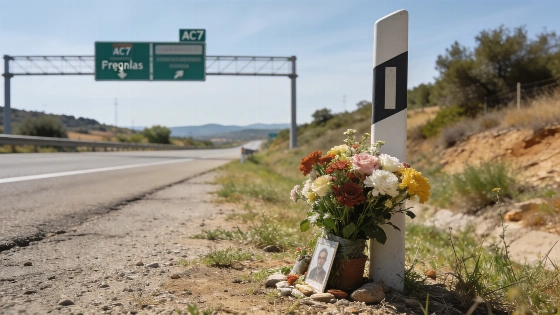
Ten years after a bus crash killed 13 Erasmus students near Freginals, the town remains marked by the tragedy. Residents recall the shock and lasting trauma. The case closed after the driver died before trial.
A decade after the fatal bus crash on the AP7 near Freginals, the small Catalan municipality continues to live with the consequences of one of Spain’s most devastating road accidents involving international students. On March 20, 2016, a coach carrying 59 Erasmus students returning from the Fallas festival in Valencia overturned, leaving 13 young women dead and more than 20 injured. The incident, which occurred early on Palm Sunday, instantly shattered the quiet routine of a town with fewer than 500 residents.
Local authorities and residents say the tragedy has become inseparable from Freginals’ identity. According to the current mayor, Neus Franch, the accident is often the first thing outsiders mention when the town is named. Ingrid Fabra, who has served as the local justice of the peace for ten years, describes the event as deeply traumatic for such a small community, noting that the victims died just meters from residents’ homes.
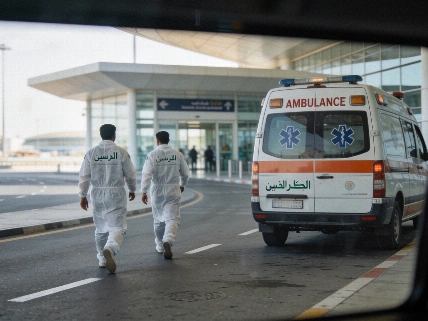
The crash site remains a stark reminder. The bus, operated by Autocares Alejandro, left Valencia for Barcelona but never reached its destination. Investigators determined the driver, Santiago, fell asleep at the wheel, causing the vehicle to veer and overturn on a straight, flat stretch of highway. Emergency services arriving at the scene found chaos: injured and disoriented students, many of them foreign, wandering the motorway. One of the first Mossos d'Esquadra officers recalled the surreal sight of bloodied passengers thanking rescuers in broken Spanish.
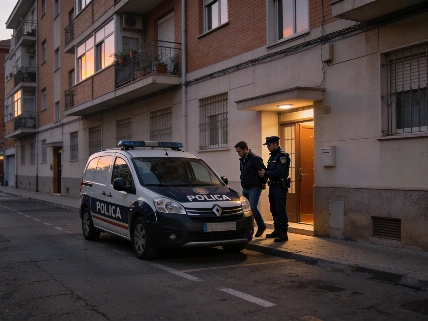
Survivors were taken to a hotel in Tortosa, where police and medical staff tried to shield them from the outside world. Despite their ordeal, many appeared calmer than those caring for them. The local prosecutor later accused the driver of gross negligence, citing his failure to rest adequately before the journey. He faced charges of 13 counts of manslaughter and 26 counts of reckless injury, but the case was closed after Santiago died suddenly in April 2023, before he could be tried.
Today, a memorial stands near the crash site, though it is located on the opposite side of the highway from where the accident occurred. Some residents regularly leave flowers in memory of the victims, while others, like Fabra, admit they have never visited the monument, finding it too unsettling. The bus itself remained in a scrapyard in Amposta for months, drawing the gaze of passersby who could not forget the tragedy.
Freginals is not alone in facing the long-term effects of a major incident. Other Spanish towns have also struggled with the aftermath of sudden crises, as seen when Ceuta dealt with the influx of thousands of migrants and the resulting strain on local infrastructure, described in detail in this report on Ceuta’s response to mass migration.
The Freginals crash remains one of the most significant road tragedies in recent Spanish history. Erasmus programs, which bring thousands of students to Spain each year, have since reviewed travel safety protocols. The AP7, a major artery for both local and international traffic, continues to be closely monitored for safety. The memory of the accident endures in Freginals, shaping how the town is seen both by its residents and by those who pass through.