His life moved between factory management and social poetry. Engineering shaped his work. War and love followed his path into rebellion.
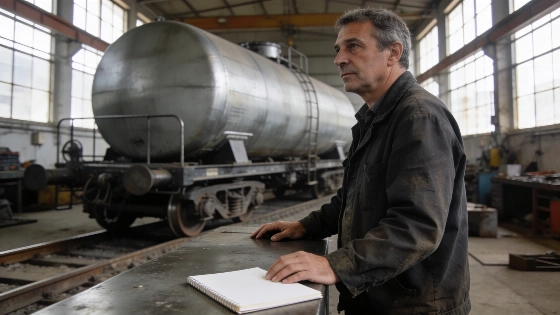
The family business cut Gabriel Celaya loose after he turned its history into a novel under his own name. The decision exposed the conflict at the centre of his life. He was an engineer linked to a factory making tank wagons, yet he believed verse could change the future. That contradiction gave Spanish poetry one of its most unusual public figures.
His most famous line remains “La poesía es un arma cargada de futuro”. Celaya did not treat poetry as a private ornament. He believed it could help save the world. His working life, however, placed him inside the management of an industrial company whose owners feared that published verses would damage its reputation with banks.
The board asked Rafael Gabriel Múgica Celaya to stop publishing under his own name. An engineer-manager who wrote poetry, they argued, could discredit the firm. He adopted the name Gabriel Celaya instead. He then used it for Los buenos negocios, a novel that described the entire history of the factory. The response was immediate: the company dismissed him, and his salary went to his first wife.
That was not the only division in his biography.
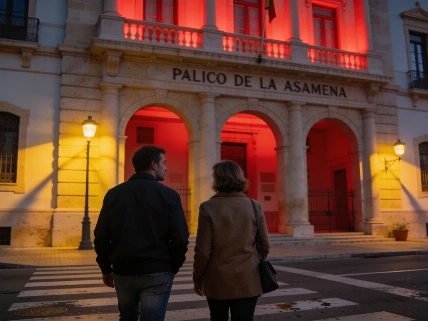
Celaya was born into a wealthy San Sebastián industrial family. His father manufactured tank wagons and gave him a blunt choice after he finished secondary school in 1927: study engineering or begin work at the factory the next day. The prospect of entering the business terrified him, so he moved to Madrid. Because his father was liberal, he was sent to the Residencia de Estudiantes on Calle del Pinar.
Проверенные результаты поиска в основном вели к несвязанным страницам государственных сайтов Колумбии, университетским справочникам и общим каталогам. Они не содержали авторитетного подтверждения биографических деталей, изложенных в этой статье, поэтому новые даты, цифры и официальные заявления здесь не добавляются.
The residence placed him inside an atmosphere shaped by artists and intellectual life. He first shared a ground-floor room with Orbaneja Aragón, a cousin of José Antonio. Stories linked the same room with Lorca. Later accounts connected it with Dalí and Buñuel. The house hosted courses and lectures with an aristocratic air. During one visit by the king, Buñuel appeared in the courtyard naked except for a hat while still covered in shaving soap.
Celaya completed his engineering degree in 1935. The school director Artigas told the graduating engineers that their social importance could be measured by one detail: in the plays of the Quintero brothers, the romantic hero was always an industrial engineer. Celaya returned to San Sebastián that year feeling lost, wrote his first book and entered it in a competition.
Five days before the war began in July 1936, he received the Premio Bécquer. He returned to Madrid with an opportunity to work for the newspaper El Sol and live as a writer. War changed that plan. He presented himself as a gudari in Bilbao and was quickly made a captain. He later recalled reviewing machine-gun positions on Mount Gorbea while riding a horse in a shiny black corduroy suit.
Amparitxu Gastón supplied the harsh counterpoint to that memory. She accused him of living as a privileged man who ate lamb during the war. She lacked even chickpeas, and her father was held in a disciplinary battalion. Their relationship lasted 35 years without marriage, but their life together resembled a marriage in its intensity. They shouted and loved. They drank, hated and admired one another.
Celaya and Amparitxu were treated as an inseparable pair. They walked to the market for escarole. They posted letters and dealt with official documents. Late-night drinks in Oliver were part of their life together. He appeared as a large Basque man with pale blue eyes and a white streak in his hair. Beside him, Amparitxu became the unmistakable feminine shadow of his public image.
The collision between artistic identity and public reputation also appears in an earlier account of Eduardo Rodríguez 'Rodway', where a musician's name outlived the original lineup of his band. Celaya's case is different but equally revealing: the chosen name became stronger than the industrial identity imposed on him by family and company.
His factory role made him a rare figure. He handled capital increases and trains while writing social poetry and pamphlets. The workers brought him requests, but he passed them to the board and saw them defeated. His claim that the workers loved him collided with the communist doctrine he embraced. That doctrine allowed no easy affection between employees and employers.
Celaya's life refused the convenient separation between art and work. He was the author of a famous slogan about the future. He was also the industrial heir who entered the factory. The company dismissed him for writing about it, and his privilege was challenged at home. For Celaya, a poem was a tool meant to confront reality rather than an escape from it.