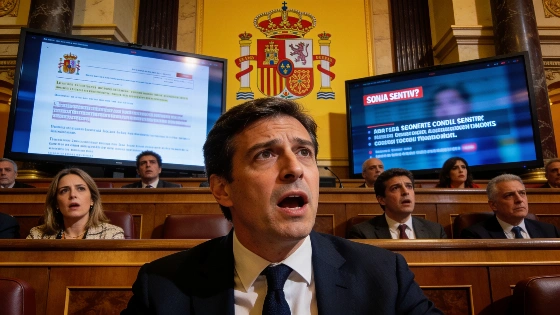
A leak of private messages and sensitive data involving José Luis Rodríguez Zapatero has triggered strong reactions from government officials and political allies. The incident raises concerns about privacy breaches and judicial procedures.
The Spanish government and its coalition partners are confronting a wave of criticism and concern after confidential messages and personal information belonging to former Prime Minister José Luis Rodríguez Zapatero were leaked during an ongoing investigation. The disclosure, which included private conversations with his secretary and detailed entries from his agenda, has been described by officials as a serious breach of privacy and legal norms.
Transport and Sustainable Mobility Minister Óscar Puente highlighted the severity of the leak, noting that it exposed sensitive details such as email passwords, bank account information, and home addresses. He questioned the public interest in revealing private dinners and personal routines, emphasizing that such information is unrelated to the case under investigation. Government spokesperson Elma Saiz called for strict adherence to legal principles protecting individual privacy, underscoring the need for respect within judicial processes.
Judge José Luis Calama of the Audiencia Nacional has ordered an inquiry to identify those responsible for the leak, considering its potentially criminal nature. In response, Zapatero has formally requested the judge to annul the investigation and exclude all evidence obtained through these disclosures. The controversy has also drawn criticism from Sumar’s deputy spokesperson Alberto Ibáñez, who argued that the publication of personal messages lacking political or criminal relevance undermines democratic values. He pointed out that details such as visits to the hairdresser or private meals should not be subject to public scrutiny.
Gabriel Rufián, spokesperson for ERC, described the exposure of Zapatero’s personal agenda as “outrageous,” noting that similar leaks have occurred in Spain for years without consequence. He expressed skepticism about the protection of privacy in high-profile legal cases, suggesting that leaks to certain media outlets are almost inevitable.
Within the PSOE, party sources voiced alarm over the increasing frequency of leaks involving information unrelated to official investigations, warning that such practices violate the rights and privacy of those affected. They stressed that fundamental rights, especially the right to privacy, must remain non-negotiable and should be prioritized in judicial proceedings.
Meanwhile, Ester Muñoz, spokesperson for the Partido Popular in Congress, refrained from commenting on the specifics of the leak, stating only that the information forms part of an official investigation and a UDEF report. She emphasized that the judge’s assessment of the messages and payments is what ultimately matters.
This incident comes amid heightened scrutiny of political transparency and judicial conduct in Spain. Recent developments, such as Leire Díez’s decision to testify independently in court, have further intensified debates over privacy, party discipline, and the boundaries of public interest. For more on the pressures facing PSOE leadership in the current climate, see this analysis of Leire Díez’s independent testimony and its impact on the party.
Spain’s legal framework enshrines the right to privacy as a fundamental protection, but high-profile cases often test the limits of these safeguards. The ongoing debate highlights the tension between investigative transparency and the personal rights of those involved, a challenge that continues to shape public trust in institutions.