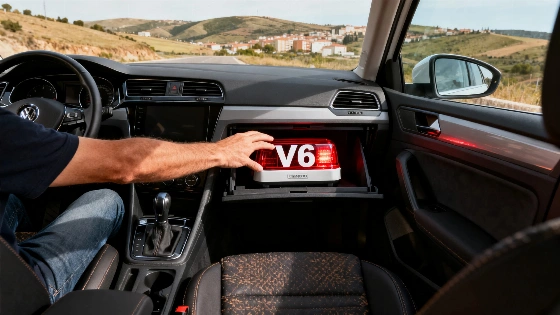
Spain's Guardia Civil says it cannot respond to every V16 beacon alert. The DGT's plan faces staffing shortages, with nearly 3,000 daily incidents. Traffic patrols are already stretched thin across the country.
The Guardia Civil has pushed back against the Directorate-General for Traffic's (DGT) proposal to dispatch patrols to every roadside emergency signaled by a V16 beacon. Carlos Cantero, national traffic coordinator for the AUGC, made clear that the current number of officers is far from sufficient to cover the volume of alerts now being registered on Spanish roads.
According to Cantero, the DGT's plan, which mirrors a protocol already in place in the Basque Country, is simply not feasible nationwide. In the Basque region, the Ertzaintza responds to every V16 beacon activation, but the territory is smaller and resources are more concentrated. In contrast, Spain's Guardia Civil de Tráfico operates with around 9,000 officers, while sector associations estimate that over 10,000 are needed to provide adequate coverage across the country.
Each day, the DGT receives approximately 2,700 V16 beacon alerts, meaning thousands of drivers signal emergencies on Spanish roads daily. Cantero points out that expecting patrols to attend every incident is unrealistic, especially as existing teams are already stretched by breakdowns, accidents, pedestrian incidents, and road hazards. He notes that in busy areas like the A-4 in Madrid, there may be three or four incidents per shift, but only two or three patrols available at most.
Current instructions already advise officers not to attend minor incidents on secondary roads, reflecting the strain on resources. The situation is further complicated by ongoing campaigns, such as increased alcohol checks, which can absorb all available personnel in a given area. Cantero describes the DGT's proposal as disconnected from the operational reality faced by traffic officers.
The debate intensified after the Ertzaintza confirmed to El Debate that it responds to every V16 beacon activation in the Basque Country. Cantero emphasizes that the Basque model cannot be replicated nationwide due to differences in territory size and available resources. The Guardia Civil's limited manpower means that, outside the Basque Country, such a protocol would be impossible to sustain.
Spain's traffic patrols have faced mounting pressure in recent years, with staffing levels failing to keep pace with growing demands. The V16 beacon, introduced to improve roadside safety, has led to a surge in alerts but has not been matched by an increase in patrol numbers. This mismatch highlights broader challenges in Spain's road safety infrastructure, where ambitious policies often collide with practical limitations.
For context, the strain on emergency services is not limited to traffic incidents. In a recent case, authorities in Almería identified six victims following a deadly fire in Los Gallardos, including international residents, as reported in coverage of the Los Gallardos tragedy. Such incidents underline the ongoing challenges faced by emergency responders across Spain.
The DGT's push for a nationwide V16 response protocol has sparked debate about the balance between safety ambitions and operational capacity. As the number of roadside emergencies continues to rise, the question remains whether Spain's traffic authorities can adapt their strategies to the realities on the ground without overburdening already stretched patrols.