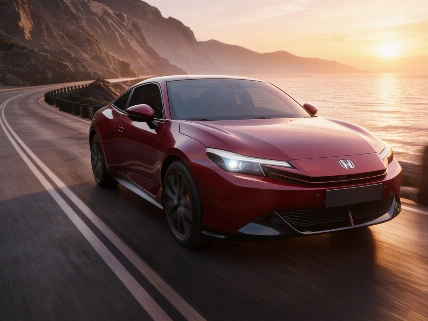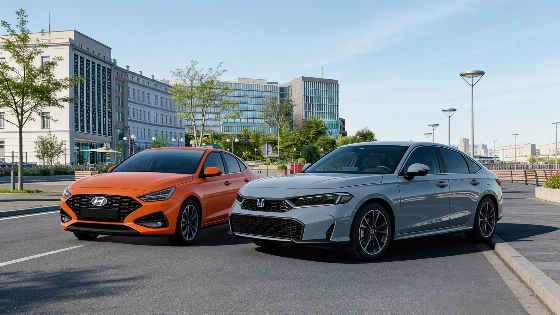
Honda Civic and Hyundai i30 offer two distinct visions for hybrid compacts in Spain. The Civic impresses with refined driving and space, while the i30 delivers value and versatility. Here’s how they compare for buyers in 2026.
Choosing between the Honda Civic and Hyundai i30 in 2026 means weighing two sharply different approaches to the modern compact car. Both models target drivers who want efficiency and practicality without moving to an SUV, but their strengths and compromises are clear from the first glance.
Design and Dimensions
The Honda Civic, refreshed in late 2025, stretches to 4.56 meters in length—making it one of the largest in its class. Its fastback silhouette and understated styling mark a shift from previous generations. Inside, the Civic sets a high bar for perceived quality, with premium materials and a layout that avoids the current trend of oversized central screens. The 9-inch infotainment display is joined by a digital instrument cluster that grows from 7 to 10.25 inches in higher trims. Rear passengers benefit from generous space, and the boot offers 410 liters, expanding to 1,220 liters with the seats folded.
By contrast, the Hyundai i30 is more compact at 4.34 meters and offers three body styles: a classic five-door hatch, a practical estate (CW), and a fastback variant that most closely mirrors the Civic’s profile. The i30’s interior doesn’t match the Civic’s tactile quality, but it remains functional and ergonomic, with physical controls for key functions and a 10.25-inch central screen. The boot holds 395 liters, or up to 1,300 liters with the rear seats down, making it competitive for its size.
Engines and Hybrid Technology
Honda has streamlined the Civic’s engine lineup to a single hybrid (HEV) option: a 2.0-liter petrol engine paired with an electric motor, delivering a combined 184 hp through a CVT automatic and front-wheel drive. This setup prioritizes smoothness and efficiency, and the Civic carries the coveted ECO badge from Spain’s DGT.
The Hyundai i30, meanwhile, sticks to petrol engines for its main range: a 1.0 T-GDi three-cylinder with 115 hp and a 1.6 T-GDi four-cylinder with 150 hp. However, the i30 Fastback introduces mild-hybrid technology with a 48-volt system, available in a 1.0 T-GDi (100 hp) and a 1.5 T-GDi (140 hp) with a dual-clutch automatic. These electrified versions also qualify for the ECO label, broadening the i30’s appeal for urban drivers and those seeking tax benefits.
Equipment and Pricing
The Civic’s starting price is €33,900, reflecting its size, hybrid tech, and standard features. Even the base Elegance trim includes adaptive cruise control, wireless charging, LED headlights, parking sensors, a rear camera, heated front seats, and keyless entry. Safety is a priority, with the Honda SENSING suite offering a comprehensive set of driver aids.
The Hyundai i30 undercuts the Civic significantly, starting at €22,550 with financing. The fastback hybrid variant begins at €23,290. Standard equipment covers essentials like cruise control, parking sensors, lane-keeping assist, digital instruments, LED headlights, and 15-inch alloy wheels. While the interior materials are less plush than the Civic’s, the i30’s build quality and ergonomics remain strong points.
Driving Experience and Practicality
On the road, the Honda Civic distinguishes itself with a refined, engaging drive that appeals to those who value comfort and dynamic handling. Its spacious rear seats and large boot make it a practical choice for families or anyone needing extra room. The i30, while less sporty, offers a comfortable ride and enough space for four adults, with the added flexibility of multiple body styles.
For buyers focused on value and everyday usability, the i30’s lower price and broad engine range are compelling. Those who prioritize driving enjoyment, interior quality, and advanced hybrid tech will find the Civic’s higher cost justified by its overall package.
Context and Final Thoughts
Compact cars have lost ground to SUVs in Spain, but models like the Civic and i30 show the segment still has life—especially for drivers who want efficiency without sacrificing driving pleasure or practicality. As noted in a recent analysis of how financial pressures can shape major decisions—such as Jorge Lorenzo’s account of his tax battle’s impact on his career—the right car choice often comes down to balancing cost, comfort, and long-term value.
In 2026, the Honda Civic stands out for those willing to invest in a premium compact with hybrid power and a rewarding drive. The Hyundai i30, meanwhile, remains a smart pick for budget-conscious buyers who want flexibility and proven reliability. Both models reflect the evolving priorities of Spanish drivers, where efficiency, technology, and practicality increasingly outweigh badge prestige.
For context, Spain’s ECO label continues to influence car buying decisions, offering tax breaks and access to low-emission zones. Hybrid and mild-hybrid compacts like these are likely to remain popular as regulations tighten and urban mobility evolves. Ultimately, the choice between Civic and i30 depends on what matters most: driving enjoyment and finish, or price and versatility.