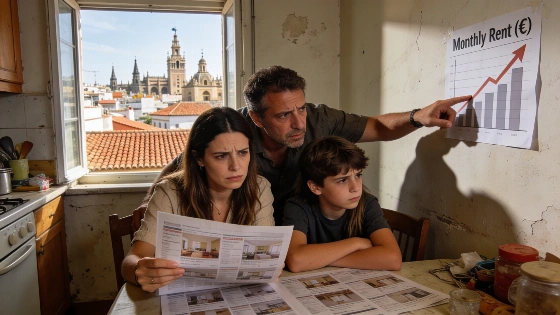
Housing has become the leading issue for Andalusians, surpassing health and unemployment. The latest Centra survey shows a sharp rise in concern over access to homes. Political preferences are also shifting in the region.
Access to housing has surged to the top of public concerns in Andalusia, overtaking both healthcare and unemployment, according to the latest barometer from the Centro de Estudios Andaluces (Centra). The shift comes as property prices and rents in the region climb faster than the national average, intensifying pressure on household budgets and reshaping the political landscape.
Centra’s survey, conducted with 3,600 interviews between June 19 and July 2, reveals that 22.2% of respondents now identify housing as their main worry. This marks a clear jump from the previous barometer in April, where housing and public healthcare were nearly tied (21.8% and 21.9% respectively). Now, healthcare trails at 14.3%, with unemployment at 13.7%.
The data highlights a notable political shift as well. While the Partido Popular (PP) remains the party most trusted to address Andalusia’s key problems (26.7%), Adelante Andalucía has, for the first time, overtaken PSOE as the main alternative. The left-wing coalition, which quadrupled its seats in the last regional election, is now seen by 16.5% as best equipped to tackle socio-economic challenges, ahead of PSOE (12.3%) and Vox (9.4%). Only 5% express confidence in Por Andalucía, and a significant 18.6% believe no party can solve these issues.
Rising housing costs are at the heart of this anxiety. According to recent INE figures and data from the Idealista portal, Andalusia has experienced the fastest rent increases in Spain. This trend is forcing many residents to reconsider their summer plans: 45.7% have not scheduled holidays, with 23.6% citing financial constraints and 19.3% changing destinations due to higher rental and living costs. Over half of those surveyed will either spend less or not travel at all this summer, underscoring the impact of housing expenses on daily life.
The survey period coincided with coalition talks between PP and Vox, culminating in a government agreement announced on July 2. Despite the region’s leadership promoting Andalusia’s economic growth, the Centra barometer paints a more complex picture, with many households feeling squeezed by rising costs. This tension echoes broader challenges seen elsewhere in Spain, such as the strain on communities during crises—recently illustrated when authorities in Almería investigated the causes of a deadly wildfire that left residents facing new hardships.
Andalusia’s housing dilemma is part of a wider national trend. Spain has seen a steady increase in property prices since the mid-2020s, driven by limited supply, strong demand, and the popularity of short-term rentals in tourist regions. In major cities and coastal areas, locals often compete with investors and seasonal visitors for available homes, pushing up both purchase and rental costs. The government has introduced measures to regulate rents and expand affordable housing, but implementation varies by region. For many Andalusians, the current spike in housing costs is not just an economic issue but a daily reality shaping decisions about work, family, and even summer holidays.