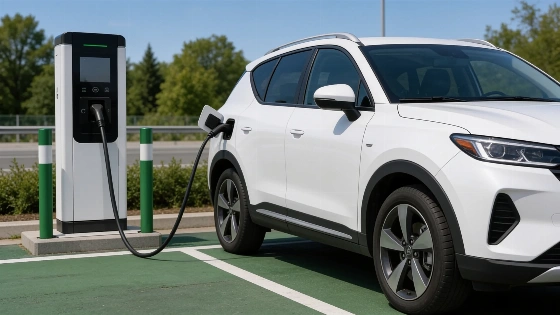
Spain’s Plan Auto+ has officially launched, bringing a new round of incentives for drivers considering a switch to electric vehicles. The programme has a reported €400 million allocation for 2026: €350 million for private applicants, with €50 million set aside for business applicants, including self-employed workers and companies. Awards are processed under the applicable call and depend on the available budget.
Eligibility is tied to the CERO environmental label issued by Spain’s Dirección General de Tráfico (DGT), but the label alone does not guarantee the maximum grant. The amount also depends on the vehicle’s powertrain and pre-tax price, while European manufacturing criteria can raise the payment. Plan Auto+ covers passenger cars and other eligible vehicles, including light vans and two-wheelers such as motorcycles or quadricycles. Companies face separate application limits.
Grant Amounts and Dealer Discounts
For private buyers, the reported maximum grant for an eligible passenger car is €4,500. The stated base amount is €3,375 for a car priced at no more than €35,000 before taxes, falling to €2,925 for a car priced above €35,000 and up to €45,000. A further €675 is tied to assembly in the European Union, while qualifying EU battery assembly adds €450. Meeting both criteria brings the total to €4,500. Passenger cars priced above the €45,000 pre-tax ceiling fall outside this calculation.
Dealer discounts are separate from the government grant. For qualifying new passenger cars and vans, the dealer must show a minimum €1,000 discount on the invoice. The invoice should clearly show the reduction against the vehicle price and document the transaction. Certain N1 light commercial vehicles may qualify for support of up to €12,000 when acquired by eligible self-employed applicants or microenterprises, subject to eligibility rules tied to applicant status and the vehicle, including business-activity criteria. This is not a universal van grant. The applicable call sets the terms for other vehicle categories.
Steps to Maximize Your Grant
The highest support is associated with battery-electric vehicles. For the business line, the reported reference calculation assigns pure electric vehicles 50% of the maximum reference amount, compared with 25% for plug-in hybrids and extended-range electric vehicles. The programme’s “EEE” approach, meaning electric, economic and European, also considers the vehicle’s price and manufacturing origin. A CERO label alone does not determine the payment.
For passenger cars, the relevant pre-tax price thresholds are €35,000 and €45,000. The €4,500 maximum requires the vehicle to meet the electric, economic and European criteria, including qualifying vehicle assembly and battery assembly in the EU. Buyers should check that the exact model appears on the current eligible-vehicle list before signing a purchase contract.
Nearly new, demonstration and “kilómetro cero” vehicles may qualify under additional conditions. Their first registration must have taken place in Spain, and no more than 12 months may pass between that registration and the buyer’s invoice. The vehicle must meet the CERO and price requirements, and the buyer must keep it registered in their name for at least two years. Selling it earlier may trigger repayment of the grant.
Who Benefits and What’s New
Plan Auto+ is open to private buyers and business applicants, including companies and self-employed people. Funding lines are separate, and businesses face limits on the number of vehicles they can claim. Applicants generally need to be up to date with the Agencia Tributaria and Seguridad Social, keep the vehicle registered in Spain and meet the programme’s retention conditions. Certain commercial-vehicle benefits also depend on the applicant’s economic activity and accepted CNAE-2025 classifications.
For those comparing electric models, understanding these rules matters. As highlighted in our review of the BYD Atto 2’s competitive features and pricing, the market is developing rapidly, and the right choice can mean thousands of euros in savings.
Basic Details and Context
Applications go through the Ministerio de Industria y Turismo portal, using electronic identification such as Cl@ve or a digital certificate. The application file may require the vehicle invoice and proof of payment, registration records and technical information, plus bank-account details and evidence that the applicant is current with tax and social-security obligations. A complete application matters: funding is allocated on a first-come, first-served basis until the relevant budget is exhausted.
A Motor16 report dated 21 October 2026 said that about 71% of the programme’s €400 million allocation had been requested, leaving slightly more than €116 million unrequested at that point. That figure reflects the reported status on that date. It does not guarantee that every eligible applicant will receive the maximum amount, since the outcome also depends on the relevant funding line and when a complete application is registered.