A dangerous build-up of humidity on the Teatre Grec stage put dancers at risk during the Brel performance by Rosas. Despite the hazard, the show continued, leaving a strong impression on the audience.
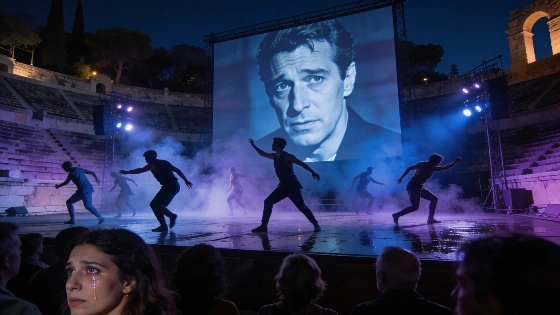
Severe humidity on the stage of Barcelona's Teatre Grec created hazardous conditions for dancers during last night's performance of Brel by the renowned Rosas company. The amphitheater, filled to capacity for one of the Festival Grec's most anticipated events, saw the stage floor become increasingly slick as the evening progressed. This unexpected moisture forced the performers to adapt their movements, raising concerns for their safety throughout the show.
Anne Teresa de Keersmaeker, the 66-year-old choreographer and founder of Rosas, addressed the audience mid-performance to explain the risks posed by the slippery surface. She described the stage as resembling an ice rink, highlighting the challenge of maintaining control during complex choreography. Despite these difficulties, De Keersmaeker and her dance partner Solal Mariotte chose to continue, with De Keersmaeker later expressing hope to return under better conditions.
The performance itself, blending contemporary dance with the iconic songs of Jacques Brel and evocative visual projections, maintained its emotional intensity despite the limitations. De Keersmaeker, cautious to avoid injury, at times reduced her movements to subtle gestures, yet these minimal actions carried significant expressive weight. Mariotte, whose background includes breakdance, adapted by using the slickness to his advantage, incorporating gliding motions that added a unique dynamic to the choreography.
Throughout the evening, the audience was visibly moved, particularly during standout moments such as Quand on n’a que l’amour, performed with striking intensity. The setlist included Brel classics like La valse à mille temps, Les bourgeois, Les marquises, Les bonbons, Les flamandes, La chanson des vieux amants, Jef, and concluded with a powerful rendition of Jojo. A particularly memorable segment featured Le plat pays, accompanied by projections of flooding across the stone backdrop, and Rosa, which playfully referenced the dance company itself.
The most striking scene came during Ne me quitte pas, when De Keersmaeker slowly removed her clothing and stood nude before a projection of Brel's face, his mouth aligned with her back. This visual metaphor for vulnerability and the passage of time was heightened by her raw vocalizations, deepening the sense of loss and emotional exposure. The contrast between the dancers' physical approaches, shaped by the treacherous floor, underscored the blend of elegance and daring that defines the production.
Despite the technical setback, the evening was widely regarded as unforgettable, with the combination of Rosas' choreography and Brel's music proving irresistible. The incident at Teatre Grec echoes broader festival challenges, as seen in other cultural events where unexpected conditions test performers' adaptability. For example, festival fashion trends have also responded to changing environments, as highlighted in a recent feature on evolving summer styles at major European festivals.
Brel will be performed again at Teatre Grec, with organizers and artists hoping for improved stage conditions. The event serves as a reminder of the unpredictability of open-air venues and the resilience required from performers. The Festival Grec, established in 1976, is a cornerstone of Barcelona's cultural calendar, attracting international artists and audiences each summer. Its open-air amphitheater, while celebrated for its atmosphere, is occasionally subject to weather-related challenges that can impact both performers and spectators. The commitment shown by Rosas and the emotional response from the audience reinforce the enduring appeal of live performance, even under less-than-ideal circumstances.