PP strengthens its position in Galicia through controversial alliances with defectors. Over the past year, eight municipalities in Galicia have changed leadership due to deals with defectors. PP is regaining control in Lugo, despite party bans. A Constitutional Court decision has altered the balance of power.
In Galicia, the number of cases where local power shifts to the Partido Popular (PP) with the support of turncoats—deputies who have left their parties—has surged sharply over the past year. A key factor was a recent Constitutional Court verdict allowing the use of such deputies' votes in motions of no confidence, which was previously prohibited by law. This decision enabled PP to regain control of Lugo for the first time in 27 years, as well as to take power in six more municipalities in the region.
Power shift in Lugo
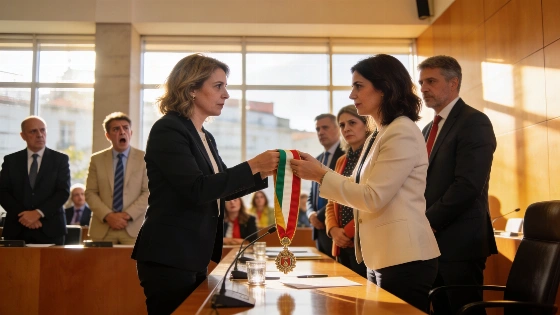
In Lugo, the PP took advantage of a series of tragic events in the Socialist ranks: three members of the municipal council died in the past year, which opened the way for María Reigosa. She first filled the vacant seat, then left the PSOE, and after a few months supported an alliance with the PP, despite her public promises not to participate in such arrangements. As a result, the party of Rueda gained a majority and appointed Elena Candia as the new mayor. Within the PSOE, this move drew sharp criticism: the former mayor, Lara Méndez, called the events a "funeral hall pact," suggesting that negotiations took place during farewells to deceased colleagues.
Attempts in other cities
The PP tried to implement a similar scenario in the capital of Galicia—Santiago de Compostela. Here, the party offered former socialist Mercedes Rosón the position of mayor in exchange for supporting a vote of no confidence against the governing BNG and Compostela Aberta coalition. However, Rosón refused, explaining that she was not prepared to take part in such agreements and emphasizing that these deals undermine public trust in political institutions. As a result, despite the PP being the most voted party in the 2023 elections, it was unsuccessful in changing power in Santiago.
Party reactions and consequences
The internal rules of the PP explicitly prohibit alliances with turncoats, considering this a serious violation. However, neither the federal nor the regional party leadership has explained why these rules are being ignored. PP representatives in Madrid shift responsibility to the regional structures, while in Galicia, they believe that after the Constitutional Court's decision, such deals have become a 'democratic tool.' At the same time, the party emphasizes that María Reigosa's economic and political situation has not improved since her transition, which formally complies with the requirements of the law.
Trends and context
Over the course of a year in Galicia, eight municipalities saw changes in leadership through similar schemes: seven times the PP won, and once the Socialists. In most cases, this involved deputies switching from PSOE or local parties. According to former Lugo mayor Miguel Fernández, such operations could signal the beginning of the end for their initiators. Similar conflicts over power shifts at the local level have already attracted public attention in other regions of Spain, as happened in Andalusia, where allegations of corruption and links to the drug trade escalated the election campaign — more on this can be found in the article about pre-election scandals in Andalusia.