Infanta Sofía delivered her first solo speech in Zaragoza, focusing on the challenges facing teachers in Spain. Her appearance marks a new phase in the Royal Family’s public engagement. The event drew national attention.
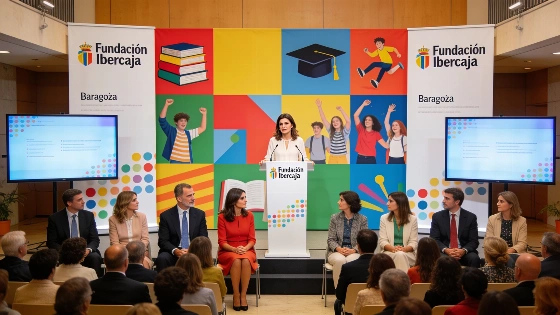
Infanta Sofía made a significant public debut in Zaragoza, where she addressed an audience of 500 at an event organized by Fundación Ibercaja. Her speech, which focused on the pressing issues facing educators in Spain, marked her first solo appearance outside Madrid and underscored the evolving role of the Royal Family’s younger generation. Sofía, currently second in line to the Spanish throne, openly discussed the lack of funding for teachers and highlighted concerns such as bullying, loss of authority, and the undervaluation of the teaching profession.
Her intervention went beyond ceremonial duties. Sofía attended preparatory workshops in the morning, engaging directly with the 25 finalist teachers from across Spain. In her address, she emphasized that teaching is rarely chosen for financial gain or recognition, and she spoke personally about the lasting impact teachers can have on students. The event was part of an initiative to recognize and support innovative educational projects, reflecting a broader effort to bring attention to the challenges within Spain’s education system.
The decision for members of the Royal Family to dedicate themselves exclusively to institutional work was set by King Felipe VI in 2014, following a period of public scrutiny and the desire to avoid scandals like the Nóos case. Since then, the Royal Family has maintained a reduced public profile, with Sofía and her sister Leonor largely shielded from the spotlight until reaching adulthood. Yesterday’s event signaled a shift, as Sofía demonstrated composure and commitment in her new responsibilities.
Leonor, Princess of Asturias, showed support by attending the morning session, while King Felipe VI and Queen Letizia joined their daughters for the afternoon ceremony. The family’s united presence reinforced the message of continuity and dedication to public service. Sofía’s educational path also reflects a modern approach: after completing her first year of International Relations studies in Lisbon, she will continue her education in Paris and later Berlin, balancing academic commitments with her growing public agenda.
Her interests, including a passion for animals shared with her grandmother Queen Sofía, are expected to influence her future work. The focus on youth and education aligns with current priorities in Spain, where debates over school funding and teacher support remain central. The Royal Family’s renewed emphasis on institutional service comes at a time when public trust and the role of the monarchy are under close observation.
Recent public appearances by members of the Royal Family have drawn comparisons to other high-profile Spanish figures and estates, such as the unveiling of Cantora, which revealed the challenges of maintaining legacy and tradition in the public eye. For more on how historic properties and family roles intersect with national attention, see the detailed coverage of Cantora’s condition and its impact on public perception in this recent report.
In Spain, the title of Infante or Infanta is rare, currently held by only four women across three generations. Sofía’s path is now clearly defined by her proximity to the throne and the expectations set by her family. As she takes on more public duties, her actions and statements are likely to shape both the monarchy’s image and the national conversation on education and youth engagement. The coming years will test how effectively the Royal Family can adapt to changing public expectations while maintaining its institutional role.
For context, the Spanish monarchy has undergone significant reforms in recent years, aiming to increase transparency and restore public confidence. The focus on education and youth issues reflects broader societal concerns, as Spain continues to address challenges in its school system and the professional status of teachers. Infanta Sofía’s involvement in these debates signals a generational shift and a potential new direction for royal engagement in public life.