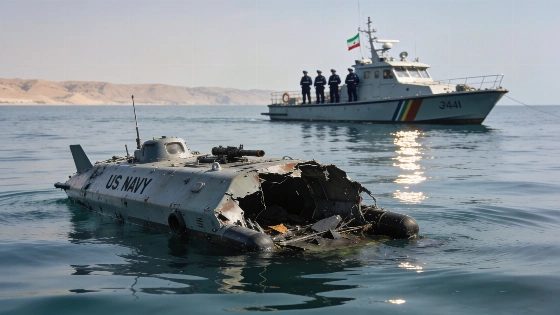
Iran’s Revolutionary Guard targeted a US unmanned vessel in the Strait of Hormuz after American strikes on Iranian oil tankers. Both sides now warn of harsher reprisals as tensions rise in the Gulf.
Iran’s Revolutionary Guard targeted a US unmanned surface vessel in the Strait of Hormuz, escalating the ongoing maritime standoff. Iranian state media and international agencies reported that the IRGC claimed the US drone was trying to enter a "restricted area" near the waterway. The US military, according to AP News, denied that any American drone was hit and called the Iranian claims "completely false."
This incident follows a period of rising tension in the region. In the days before the attack, Reuters and other outlets reported a series of strikes on commercial and Iran-linked vessels in the Strait of Hormuz and the Gulf of Oman. US Central Command (CENTCOM) said American forces had taken preemptive action against Iranian units they saw as an "imminent threat" to shipping lanes, highlighting the volatility in the area.
По данным Reuters, в начале сентября США нанесли удары по иранским военным объектам, связанным с минированием и угрозами судоходству, что усилило опасения за безопасность торговых маршрутов в регионе.
Iran’s official statement described the US actions as a “brutal act of desperation,” but also acknowledged significant damage to its own ships. The Revolutionary Guard warned all vessels in the Gulf that any “suspicious movement” or unauthorized passage would bring immediate retaliation. Iranian media, according to Euronews, said the US drone was targeted for breaching a protected zone and linked the incident to a wider pattern of confrontations in the strait.
In a public statement, the speaker of Iran’s parliament, Mohamad Baqer Qalibaf, said the “rules of the game have changed.” He warned Washington that further attacks would bring even faster and harsher Iranian responses. This comes after a week of renewed hostilities, including a US airstrike on Iranian territory that killed 19 people and Iranian missile and drone launches targeting Kuwait, Jordan, Saudi Arabia, and the UAE. As reported by AP News, both sides have traded accusations and threats, with the US saying its actions are defensive and meant to protect international shipping.
The island of Kharg, a key hub for Iranian oil exports, has again become a flashpoint. US forces struck the area in July, killing at least eight Iranian soldiers. The current cycle of attacks and counterattacks shows a shift in the Gulf’s balance of power, with both sides now openly targeting each other’s economic and military assets.
По сообщениям международных агентств, в последние недели в районе Ормузского пролива и Оманского залива фиксировалась серия атак на коммерческие и связанные с Ираном суда, а также взаимные удары между США и Ираном по военным объектам в регионе. Это указывает на расширение конфликта за пределы самого пролива и рост рисков для страхования и безопасности судоходства.
Iran’s naval command says its control over the Strait of Hormuz remains intact, despite recent losses. Spokesman Ali Mohammadi said several foreign vessels have been “punished” in the past ten days for ignoring Iranian directives. The Revolutionary Guard’s stance is clear: any perceived threat will be met with force.
This latest clash follows a month of relative calm, now broken by direct military engagement. The US has said it will impose economic costs on Iran for any attacks on American ships, while Tehran threatens to escalate if provoked. The Gulf’s shipping lanes, vital for global energy supplies, now face a higher risk of disruption.
Maritime conflict in this region rarely stays contained. As seen in previous investigation, the cost of escalation often falls on those far from the decision-makers. The current standoff exposes the vulnerability of both military and commercial fleets in the Gulf, and neither side appears ready to back down. With each strike and counterstrike, the risk of a wider conflict grows, keeping the world’s attention on the narrow waters of the Strait of Hormuz.