The ‘mamachari’ has evolved from a simple city bike into a modern electric solution for commuting, shopping, and carrying children. Its design and growing popularity reflect changing urban habits and stricter safety rules in Japan’s cities.
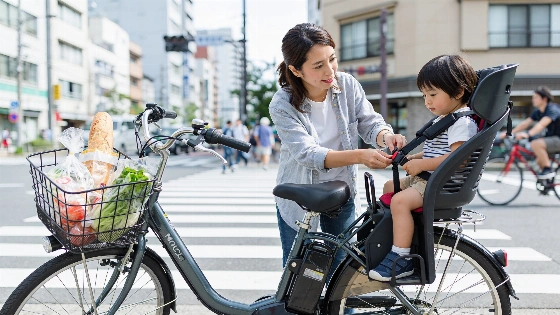
In Japanese cities, the sight of a ‘mamachari’ weaving through traffic or parked outside a supermarket is now part of daily life. Originally designed for short, practical trips, this humble bicycle has transformed into a symbol of urban mobility, especially after the introduction of electric assistance and family-friendly features.
The word ‘mamachari’ blends ‘mama’ and ‘charinko’—a colloquial term for bicycle—yet its use extends far beyond mothers. Today, students, office workers, and older adults rely on these bikes for everything from commuting to school runs and grocery shopping. The low step-through frame, front basket, and the option to add child seats make it a versatile choice for a wide range of users.
Design That Fits Everyday Life
Unlike sportier models, the typical mamachari is built for comfort and practicality. Most feature a sturdy, open frame for easy mounting, upright seating, mudguards, chain protectors, integrated lights, and a built-in lock. Wheel sizes usually range from 24 to 26 inches, balancing stability and maneuverability. The design allows riders to get on and off easily, even when carrying shopping or children, and the protective features mean there’s no need to change out of everyday clothes.
While the mamachari’s roots go back to the 1950s, a major shift came in 1956 with the Smart Lady model, which lowered the center of gravity and made cycling more accessible for people of different heights and clothing styles. The next leap arrived in 1993, when Yamaha introduced the PAS—the world’s first electric-assist bicycle. This innovation made it easier to tackle hills and heavy loads, and by 1998, models specifically designed for carrying children on steep inclines appeared. In 2009, Japan set safety standards for bikes equipped with two child seats, anticipating the current surge in demand for electric urban bikes.
Sales Reflect a Shift in Urban Mobility
According to the Japan Bicycle Promotion Institute, 2025 saw nearly two million bicycles sold, with urban models leading the market. Lightweight city bikes accounted for 769,341 units, while electric-assist models reached 315,815—generating more revenue than any other category. Although the term ‘mamachari’ is not used in official statistics, electric versions and those with factory-installed child seats are tracked separately, highlighting their growing role in Japanese cities.
The data suggests a steady demand for practical, everyday bikes, with electric-assist models gaining ground thanks to their convenience and adaptability. During the last quarter of 2025, sales of electric bikes rose by over 10% compared to the previous year, underlining their increasing appeal for families and commuters alike.
Strict Rules for Carrying Children
Transporting children on a mamachari is subject to clear regulations. In Tokyo, riders aged 16 or older can carry one child who has not yet started primary school. To carry two children, the bike must be specifically designed and certified for that purpose, meeting strict standards for stability, strength, and braking. Approved child seats can hold up to 15 kg in front and 24 kg at the rear. The Metropolitan Police provide detailed guidelines, and other prefectures may have their own rules.
Since April 2026, Japan has tightened enforcement of cycling violations. Riders aged 16 and above can now receive ‘blue tickets’—official fines for infractions such as riding on the wrong side of the road, failing to use lights at night, or not yielding to pedestrians on sidewalks. Helmets are recommended for all ages, though not mandatory. These changes reflect a broader push for safer, more responsible cycling as bikes become a central part of city life.
Context and Outlook
The evolution of the mamachari mirrors wider trends in urban transport, where convenience, safety, and environmental concerns drive innovation. While the bike’s popularity is rooted in Japan, similar models are appearing in European cities as families and commuters look for practical alternatives to cars. As regulations adapt and technology advances, the mamachari’s blend of tradition and modernity may offer a glimpse of the future for city dwellers worldwide.