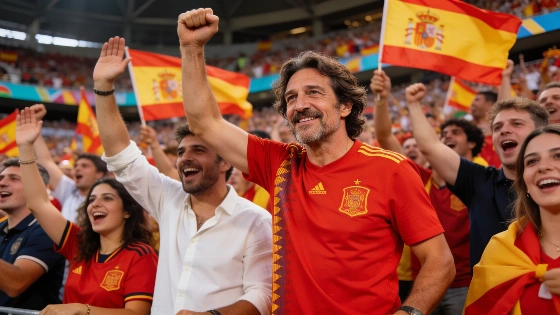
Javier Bardem faced backlash for not wearing Spain's shirt at a recent match. He later addressed the controversy, emphasizing a vision of patriotism rooted in diversity and equality. His statement quickly gained widespread attention.
Javier Bardem became the focus of public debate last week after attending Spain's match against Austria without wearing the national team's shirt. The actor, who chose a green outfit for the occasion, was accused by some of lacking patriotism. The controversy intensified on social media, with critics questioning his commitment to the national team and the country.
Days later, Bardem appeared at the Spain-Portugal match, this time wearing the iconic red shirt in the stands. Following Spain's victory, he posted a photo of himself in the national jersey, accompanied by a detailed message that quickly went viral. In his statement, Bardem outlined his perspective on patriotism, highlighting the importance of a plural, equal, and diverse Spain. He described a country where people of all backgrounds, languages, and beliefs can feel part of a shared project based on justice and mutual respect.
Bardem's message also addressed the broader meaning of being progressive in Spain. He emphasized the ongoing need to defend public education, universal healthcare, equal rights for women and men, protection for minorities, and sustainable development. According to Bardem, true patriotism is not about enforcing a single vision of the country, but about ensuring dignity, freedom, and equal opportunities for everyone.
The actor's post quickly attracted significant attention, amassing over 114,000 likes and more than 3,000 comments within hours. Notable figures from Spanish culture and sports, including Elena Furiase, Hiba Abouk, Ana Peleteiro, Laura Ponte, Tamar Novas, Ana Milán, Rozalén, Andrea Duro, Goya Toledo, Dani Mateo, Bibiana Fernández, Borja Iglesias, María Valero, Ana Wagener, Pedro Casablanc, and El Mago Pop, publicly expressed their support or joined the discussion.
This incident comes at a time when the intersection of sports, identity, and public figures is increasingly visible in Spain. The debate around Bardem's choice echoes broader conversations about national symbols and the role of celebrities in shaping public discourse. In recent years, Spain has seen a growing emphasis on diversity and inclusion, both in politics and in cultural life. The actor's intervention adds to ongoing discussions about what it means to represent the country, especially in high-profile events.
Sporting events in Spain often serve as a stage for debates about national identity and unity. The controversy surrounding Bardem's attire highlights how public figures can become symbols in these debates, intentionally or not. This dynamic is not unique to Spain; similar discussions have emerged in other countries, particularly when celebrities are seen as representatives of national values. For example, the push for international sports events in regions like Catalonia, as seen in Barcelona's recent efforts to host global competitions, reflects how sports and identity remain closely linked in the public sphere.
Javier Bardem's response has sparked renewed interest in the meaning of patriotism in contemporary Spain. His call for an open, inclusive, and democratic nation resonates with ongoing efforts to redefine national identity in a changing society. The rapid spread of his message and the volume of reactions suggest that questions of representation and belonging remain highly relevant for many Spaniards.