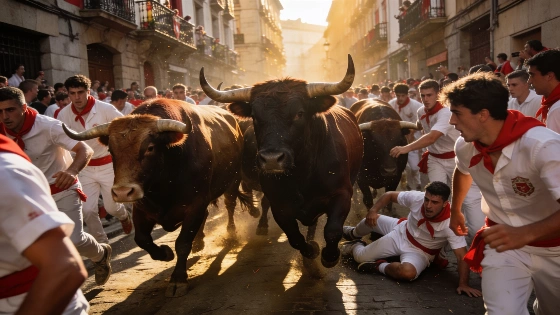
The fifth San Fermín 2026 encierro in Pamplona lasted 2 minutes and 36 seconds. Bulls from José Escolar ran tightly packed, causing multiple falls and nine injuries. The event saw the highest crowd density so far this year.
The fifth running of the bulls at San Fermín 2026 in Pamplona became the longest and most crowded of this year's festival, with José Escolar's bulls completing the 875-meter course in 2 minutes and 36 seconds. The tightly packed herd moved swiftly through the historic city center, creating tense moments as runners struggled to find space and avoid the powerful animals. The increased number of participants on this Saturday morning heightened the risk, resulting in at least nine injuries, including one caused by a bull's horn.
This encierro marked the eleventh consecutive appearance of the José Escolar ranch at Sanfermines, a name now synonymous with imposing bulls and high-stakes runs. The six bulls—Cantito, Carpintero, Chismoso, Secretario, Tomillero, and Campanero—each weighing between 570 and 615 kilos, maintained a compact formation throughout the route. Their size and presence left little room for runners, leading to several pile-ups and dangerous falls, especially in the narrowest sections of the course.
Among the injured, most suffered bruises and trauma, continuing a trend seen in previous days. Over the first four encierros, around thirty men have required medical attention, with the most serious incident being a goring on the third day that left a young runner hospitalized. The atmosphere on Saturday was especially tense, with images capturing a runner trapped between a bull and a steer, narrowly escaping further harm.
The José Escolar bulls are known for their distinctive appearance—large frames, prominent horns, and a fierce expression. This year, the herd included Cantito (590 kg), Carpintero (610 kg), Chismoso (615 kg), Secretario (570 kg), Tomillero (595 kg), and Campanero (600 kg). The animals advanced with few gaps between them, increasing the challenge for those attempting to run alongside or ahead of the group. Despite the risks, the event continues to attract a growing number of female runners, who now make up an estimated 6% of participants, reflecting a gradual shift in the festival's demographics.
As the bulls thundered through the city, the spectacle was broadcast live by RTVE, offering viewers multiple camera angles from key points along the route, including Corrales, Santo Domingo, Ayuntamiento, Mercaderes, Estafeta, Telefónica, Callejón, and Plaza. The broadcast captured the intensity and unpredictability of the run, with scenes of runners dodging horns and scrambling to their feet after falls.
The José Escolar ranch, based in Ávila, has become a fixture at Sanfermines since its debut in 2015. The bulls are raised on the Monte Valdetiétar estate, where they spend four to five years before being selected for major events in Pamplona and Madrid. The ranch is one of only two in Spain to maintain the pure Victorino Martín Andrés bloodline within the Albaserrada lineage. This year, the Casa de Misericordia will honor José Escolar with the award for best bullfight at the 2025 Feria del Toro, a recognition the breeder describes as a source of pride and a testament to the strong relationship with Pamplona.
San Fermín's encierros are renowned for their speed and danger, but this year's runs have been particularly fast, with the exception of Saturday's longer duration. The festival remains a magnet for thrill-seekers and tradition enthusiasts alike, despite the ever-present risks. For context on how the festival began this year, including the role of emergency services and the challenges posed by record crowds, see the report on Pamplona's launch of San Fermín 2026.
San Fermín is one of Spain's most iconic festivals, drawing visitors from around the world. The encierro, or running of the bulls, is a tradition dating back centuries, combining elements of local culture, ritual, and spectacle. Each morning at 8:00, a rocket signals the start of the run, as participants and bulls race through the barricaded streets toward the bullring. The event is closely monitored by medical teams and security personnel, who respond rapidly to injuries and ensure the safety of both runners and animals. While the risks are well known, the allure of the encierro continues to captivate both locals and tourists, making it a defining moment of the Spanish summer.