Judge Santiago Pedraz has refused the PP's request to suspend the command powers of Guardia Civil leaders Mercedes González and Manuel Llamas. The decision comes as both remain under investigation in the Leire Díez case.
Judge Santiago Pedraz of Spain’s National Court has dismissed a request from the Partido Popular (PP) to suspend the command authority of Mercedes González, director general of the Guardia Civil, and her deputy, Lieutenant General Manuel Llamas. Both officials are currently under investigation in the Leire Díez case, which centers on alleged attempts to influence anti-corruption probes involving government figures and associates of Prime Minister Pedro Sánchez.
The PP, acting as a popular prosecution in the case, argued that González and Llamas should be stripped of their leadership over the Unidad Central Operativa (UCO) while under investigation. The party cited concerns that their continued presence at the top of the command chain could jeopardize the integrity of ongoing investigations, particularly those targeting corruption linked to the government. The PP also warned of potential reprisals against witnesses and UCO agents, noting that the accused retain direct authority over assignments, evaluations, and disciplinary matters.
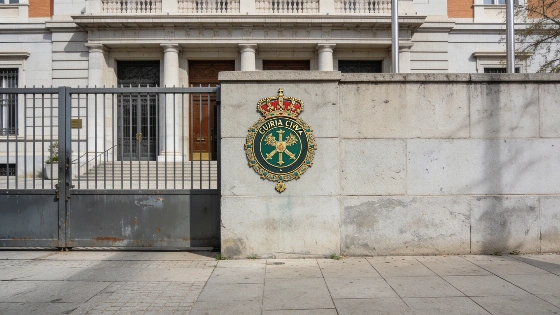
In his ruling, Pedraz concluded that such precautionary measures are unnecessary. He emphasized that the UCO operates as a judicial police unit and is required to report solely to the investigating judge, not to its administrative superiors. Pedraz further instructed that if the UCO feels its work is being compromised or “disturbed” in any way, it must immediately inform the court. Spanish law already restricts police leadership from accessing details of judicial investigations conducted by their subordinates, reinforcing the independence of such probes.
The PP had also requested that González and Llamas be barred from initiating or handling internal investigations against UCO agents and from accessing documents or systems related to the ongoing case. These demands were rejected, with Pedraz reiterating the legal framework that protects the autonomy of judicial police work.
In a related development, Judge Pedraz addressed the status of a parallel investigation led by Madrid judge Arturo Zamarriego, who is also examining activities linked to Leire Díez. Zamarriego has yet to decide whether to transfer his case to the National Court, pending a key expert report. Pedraz has notified the Madrid court that if no decision is made by early September, he will seek a ruling from the Supreme Court to determine which court should proceed with the investigation.
As a result, Pedraz has postponed any summons for Leire Díez herself, as well as for Vicente Fernández Guerrero, former president of the Sociedad Estatal de Participaciones Industriales (Sepi), and Juan Manuel Serrano, former head of Correos and ex-chief of staff to Pedro Sánchez. The judge cited the need to review evidence and await the extraction of data from Serrano’s mobile phone, scheduled for August 18. Testimony from other former Correos executives, José Luis Pérez Pastor and Patricia Álvarez Sánchez, is also on hold until further analysis of their roles in Díez’s hiring is completed.
This case has drawn significant attention due to its potential implications for the government and the independence of police investigations. Previous testimony in the National Court has highlighted unusual authorizations and internal practices within the PSOE, as detailed when two party employees described the approval of Leire Díez’s expenses and access by Santos Cerdán—an episode covered in depth in recent reporting on internal PSOE procedures.
The Leire Díez investigation is part of a broader scrutiny of alleged interference in judicial processes and the management of sensitive anti-corruption cases. The outcome could influence future protocols for police oversight and the separation of administrative and judicial functions within Spain’s law enforcement agencies. The case also underscores the ongoing tension between political leadership and the operational independence of investigative units, a theme that has surfaced repeatedly in recent Spanish legal and political controversies.