Oriol Junqueras urges cross-party deals to create stable expert teams in education and infrastructure. The plan aims to protect key sectors from political turnover and ensure consistent funding. Social and economic agents would also have a voice.
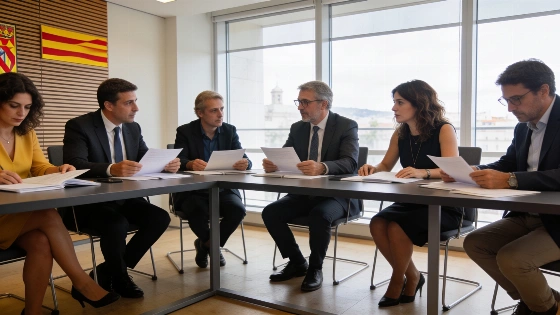
Oriol Junqueras, leader of Esquerra Republicana de Catalunya (ERC), has put forward a proposal to establish permanent teams of respected experts in Catalonia’s Department of Education and other strategic sectors. The initiative, revealed in an interview with Europa Press, seeks to insulate essential public services from the frequent changes that come with new governments. Junqueras argues that only by reaching broad, cross-party agreements can Catalonia guarantee the stability and predictability needed for sectors like education, infrastructure, energy, and housing.
According to Junqueras, the current system—where each new administration often replaces key personnel and shifts priorities—undermines long-term planning. He suggests that parties should jointly select expert teams, agree on their priorities, and commit to supporting them for periods of eight to twelve years, regardless of which party is in power. This approach, he says, would also require a binding commitment to allocate a fixed percentage of the budget to these sectors. If annual budgets cannot be approved, Junqueras proposes using credit extension decrees to ensure funding continuity.
He emphasizes that these agreements should not be limited to political actors. Junqueras insists on including social and economic stakeholders in the process, as well as bringing in experts from various fields to foster trust among all parties involved. The goal is to move away from a political culture dominated by reproach and short-termism, which he believes has become widespread globally. As an example, he points to the current political climate in the United States, where, in his view, polarization has hindered constructive policymaking.
Beyond education, Junqueras envisions similar long-term agreements in areas such as infrastructure—where he highlights the need to prioritize maintenance of the existing rail network and expansion of conventional train lines—renewable energy, and housing. He also mentions the importance of addressing forest management and income policies, including wage increases to boost families’ purchasing power. In the housing sector, Junqueras proposes allowing families to pay the 10% Property Transfer Tax (ITP) in installments, easing the financial burden of home purchases.
The proposal comes at a time when political instability and frequent government changes have raised concerns about the continuity of public policies in Catalonia. The idea of permanent expert teams is intended to provide a buffer against these disruptions, ensuring that essential services are not subject to abrupt shifts every election cycle. This approach echoes broader debates in Spain about the need for institutional stability, especially as recent events—such as the legal troubles facing the family of Prime Minister Pedro Sánchez—have highlighted the fragility of political consensus. For example, the ongoing tensions in Moncloa following court decisions involving Sánchez’s relatives have been covered in detail by RUSSPAIN, as seen in their analysis of the government’s response to these challenges (recent coverage of government turmoil).
In the broader context, Junqueras’s proposal reflects a growing recognition among Catalan leaders that sustainable progress in education, infrastructure, and social policy requires mechanisms that transcend electoral cycles. While the plan does not specify a timeline for implementation, it signals a shift toward consensus-driven governance and a call for all parties to prioritize long-term public interest over short-term political gains.