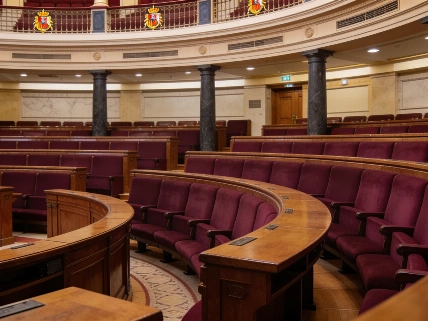
Junts per Catalunya and the PP united in the Catalan Parliament to challenge Salvador Illa on corruption. The debate signals a shift in political focus, raising questions about the future of nationalist discourse.
Political tensions escalated in the Catalan Parliament this week as Junts per Catalunya and the Partido Popular (PP) both directed sharp criticism at Salvador Illa, focusing on corruption allegations linked to the pandemic-era mask contracts. The move marks a notable shift, with Junts per Catalunya, traditionally focused on Catalan nationalist issues, now engaging directly with topics dominating the national agenda in Madrid.
During a parliamentary session, Mònica Sales, president of Junts per Catalunya, questioned Illa about his role as Minister of Health during the period when the so-called Ábalos case unfolded. The case, involving alleged profiteering from mask contracts while healthcare workers battled COVID-19, has become a flashpoint in Spanish politics. Sales' intervention surprised many observers, as it signaled Junts' willingness to address corruption debates typically associated with national, rather than regional, politics.
The PP, represented by Juan Fernández—recently appointed secretary general of the party in Catalonia—echoed the corruption accusations, using forceful language to describe the PSOE as plagued by judicial risks. Fernández's remarks underscored the party's ongoing campaign against the socialists, even as he and Alejandro Fernández consolidate their leadership within the Catalan branch of the PP.
This alignment between Junts per Catalunya and the PP in targeting Illa over corruption is seen by some as a sign that both parties are moving away from years of intense opposition to Catalan nationalist demands. Instead, they appear to be prioritizing issues of political integrity and accountability. However, as Salvador Illa reminded the chamber, legal challenges to the amnesty law and past disputes over the Estatut remain unresolved, suggesting that the nationalist question is far from settled.
Despite calls from national PP leader Alberto Núñez Feijóo to 'turn the page' on the Catalan conflict, the parliamentary arithmetic in Catalonia still complicates any potential realignment. Vox, which has shifted its focus from Catalan nationalism to anti-immigration and criticism of progressive policies, remains a factor in the region's political landscape. Yet, as recent developments show, building a stable alliance without Vox's involvement remains a distant prospect. In the corridors of the Catalan Parliament, informal interactions between Vox and Aliança Catalana continue, highlighting the fragmented nature of the opposition.
The current debate in Catalonia reflects broader trends in Spanish politics, where corruption scandals and shifting alliances frequently reshape the landscape. As seen in other recent developments—such as Junts' pressure on Pedro Sánchez to step aside to prevent a far-right government, detailed in this related report—the interplay between regional and national dynamics remains complex. For Catalan residents, these shifts may influence not only the tone of political debate but also the prospects for future governance and policy direction.
Corruption cases have long played a central role in Spanish political discourse, often serving as catalysts for realignment among parties. The Ábalos case is only the latest in a series of scandals that have tested public trust in institutions. In Catalonia, the willingness of Junts per Catalunya to engage with national issues could signal a new phase in regional politics, where traditional boundaries between local and national concerns become increasingly blurred. As the situation evolves, the balance between addressing corruption and managing longstanding nationalist aspirations will likely remain a defining challenge for Catalan and Spanish leaders alike.