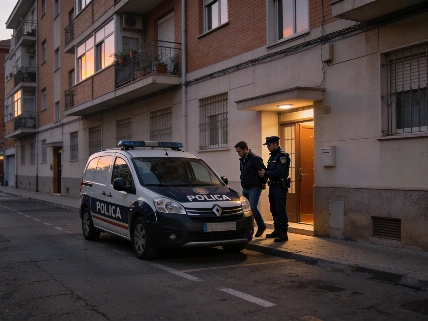
A Junts deputy clashed with police in La Junquera over language use and a DNI fee. The situation escalated, leading to mutual complaints and official reports. The case highlights ongoing tensions around language rights in Catalonia.
A confrontation at the La Junquera police station in Girona has brought renewed attention to language rights and administrative procedures in Catalonia. On July 29, Isaac Padrós, a Junts deputy in the Catalan Parliament and a visually impaired citizen, visited the station with his wife and daughter to renew another daughter's national ID (DNI). The visit quickly escalated into a dispute when Padrós insisted on being attended to in Catalan, while the National Police officer stated he could not understand the language.
According to Padrós, he requested a translator, but was informed that none was available at that moment. The situation became more tense when the officer told Padrós he needed to pay the standard fee for the DNI renewal. Padrós argued that, as the head of a large family, he was exempt from the fee. The officer responded that this exemption should have been declared before starting the process, referencing a visible notice in the station. Padrós, who is blind, objected to this, and the exchange intensified. To prevent a public scene, police escorted the family to a more private area within the station.
Padrós claims that seven or eight officers surrounded them, which he described as intimidating. When asked for identification, Padrós presented his parliamentary accreditation, but the officer insisted on seeing his DNI. His wife retrieved the document, which, according to Padrós, was taken from her abruptly. After recording their details, the family was told that the renewal would not proceed unless the fee was paid, and they were asked to leave. Padrós ultimately decided to pay the fee to avoid repeating the process.
The incident did not end there. Padrós contacted the Mossos d'Esquadra to report what he considered violations of his linguistic and social rights. Two Mossos officers arrived at the National Police station, but the outcome was unexpected: Padrós was informed that he had been reported by the National Police officer for disobedience. In response, Padrós filed a formal complaint against the officer, alleging multiple offenses, including denial of civic rights, discriminatory refusal of service, moral harm, coercion, and falsification of the police report. His detailed account of alleged mistreatment and disrespect has been submitted to the Girona prosecutor's office.
This case is the latest in a series of disputes over language use in Catalonia, where tensions often arise when public services are not provided in Catalan. Similar incidents have occurred in restaurants and shops, but this confrontation between a nationalist deputy and a state official has drawn particular attention. The episode also echoes broader debates about the role of language in public administration and the rights of citizens to use Catalan in official settings. For context, recent political controversies in Spain, such as those involving judicial independence and political polarisation, have also highlighted the sensitivity of institutional interactions, as seen in the coverage of parliamentary disputes involving national deputies.
Under Spanish law, citizens have the right to use either Spanish or Catalan in Catalonia when dealing with public authorities, but practical implementation can vary. The status of large families and their exemptions from administrative fees are also regulated, but require prior declaration. The ongoing debate over language rights continues to shape daily interactions in Catalonia, with cases like this one underscoring the challenges faced by both citizens and officials in multilingual regions.