Cayetana Álvarez de Toledo voices concern over Spain’s political climate. She questions the Ayuso penthouse case and defends judicial independence. The PP deputy urges a moral and political renewal.
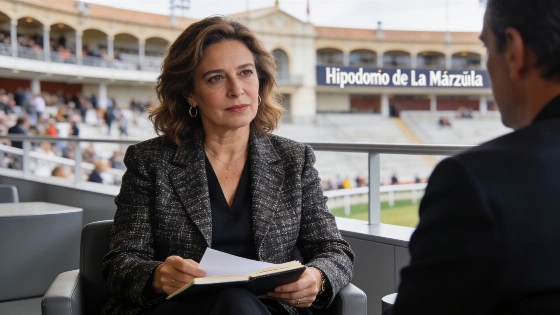
Cayetana Álvarez de Toledo, a prominent PP deputy and historian, has sharply criticised the current state of Spanish politics, highlighting deepening polarisation and the erosion of democratic standards. In a recent interview at the Hipódromo de La Zarzuela, Álvarez de Toledo addressed the ongoing controversy surrounding Isabel Díaz Ayuso and the luxury penthouse, admitting she still does not fully understand the details of the case. The issue has drawn significant attention, especially after Madrid’s regional government justified the purchase for office use, as previously reported in coverage of the Chamberí penthouse debate.
Álvarez de Toledo, who has held Spanish, Argentine, and French citizenship, described herself as a “feminist of the Camille Paglia school” and defended the right to challenge political correctness. She argued that true democratic societies must tolerate both offence and dissent, and she called for open debate within political parties, including her own. According to Álvarez de Toledo, the PP should allow internal criticism while maintaining voting discipline, and she rejected the use of rigid talking points.
On the national stage, she warned of the dangers of the government’s agreements with parties that do not condemn political violence, describing this as a serious breach in Spain’s democratic fabric. She also denounced what she called a “mafia” funded by the ruling party to undermine judges, prosecutors, and police officers fighting corruption. Álvarez de Toledo reaffirmed her support for Alberto Núñez Feijóo, expressing hope that he could lead a broad moral and political renewal. She firmly opposed any potential pardons for Carles Puigdemont and criticised the amnesty law, arguing it weakens the state and benefits neither PP nor PSOE.
Discussing Catalonia, Álvarez de Toledo credited the region’s relative calm to the actions of police and the application of Article 155, not to the amnesty law. She also highlighted the rise of Aliança Catalana, describing it as a radical and xenophobic separatist force. On the subject of Vox, she suggested that if the PP fulfilled its responsibilities, Vox would lose its relevance. She acknowledged having voted for Ciudadanos after leaving the PP, underlining her belief in political renewal from the grassroots.
Internationally, Álvarez de Toledo maintained a critical stance towards the US government and condemned the treatment of Venezuela as a political prize. She praised figures like Camille Paglia and María Corina Machado as female role models. Regarding Argentina, she recognised Javier Milei’s cultural revolution but distanced herself from his confrontational style, noting that Argentina is beginning to recover from years of populism.
Álvarez de Toledo also addressed practical issues in Spanish politics, such as the use of earpieces in Congress and the importance of a common language as a moral value. She described the 2021 Ceuta migration crisis as a hybrid attack on Spanish sovereignty and accused the Sánchez government of failing to respond effectively. Drawing a controversial comparison, she likened Sánchez to Franco “in comparable aspects” and insisted that political leaders must take responsibility and resign when necessary.
For context, Cayetana Álvarez de Toledo has previously served as PP parliamentary spokesperson and has been known for her outspoken positions, including her public disagreements with party leadership. Her latest book, “A los españoles que quieren serlo,” is set for release this autumn. The debate over the Ayuso penthouse continues to fuel discussion about transparency and public spending in Madrid, while broader questions about judicial independence and party discipline remain central to Spain’s political landscape.