Junts has left the Girona city government, ending the tripartite coalition. Guanyem and ERC now govern with only 11 of 27 council seats. The move comes ten months before municipal elections and follows rising tensions.
Political stability in Girona has been shaken after Junts announced its departure from the city’s governing coalition, leaving Guanyem and ERC to manage the municipality with a minority of just 11 out of 27 council seats. The decision, communicated by vice-mayor Gemma Geis to mayor Lluc Salellas immediately after a tense city council meeting, marks a significant shift less than a year before the next municipal elections.
The split follows a period of escalating disagreements within the tripartite government. Junts, which held six council seats and managed key areas such as Economic Promotion, Social Services, and the Catalan Language department, had signaled growing frustration in recent days. Over the weekend, Geis published an article stating that Junts had “run out of patience,” a sentiment that was echoed during the council session when opposition parties directly questioned the future of the coalition.
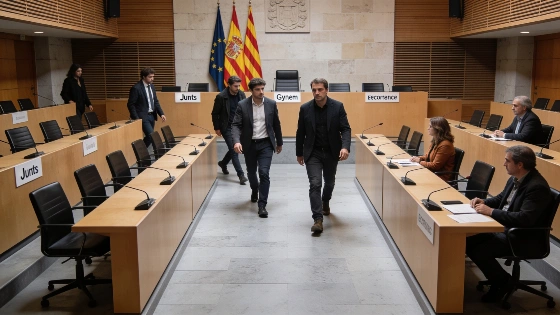
During the meeting, Geis acknowledged that the 2023 agreement had brought stability and enabled the approval of city budgets, but she also emphasized Junts’ right to reassess its position and pursue what it sees as a better path for Girona. Her remarks hinted at the imminent rupture, which was confirmed shortly after the session ended. Notably, the strained atmosphere was evident even before the meeting began, with Geis and Salellas avoiding any greeting despite sitting side by side.
Mayor Salellas, for his part, defended the value of the tripartite arrangement, highlighting its role in passing annual budgets and advancing major projects such as the new Trueta hospital, housing investments, and urban improvements. However, these achievements were not enough to prevent Junts from leaving the coalition, a move that now forces Guanyem and ERC to govern without a majority and potentially seek new alliances or support to maintain stability.
Geis, now acting as Junts’ spokesperson, is expected to provide further details on the reasons behind the split at a midday press conference. The immediate impact is clear: the city government is left with only 11 seats—eight held by Guanyem, which controls the mayoralty, and three by ERC, responsible for areas like Culture and Sports. The future direction of the administration will depend on the decisions of the remaining coalition partners and the broader council dynamics in the months leading up to the elections.
According to public records, Girona’s city council has 27 seats, requiring at least 14 for a majority. Minority governments in Spanish municipalities often face challenges in passing budgets and implementing policy, making coalition-building or external support essential. The breakdown of the coalition so close to the elections could influence both the city’s governance and the political landscape in Catalonia, where local alliances frequently reflect broader regional tensions. The coming weeks will likely see increased negotiation and uncertainty as the remaining parties navigate this new reality.