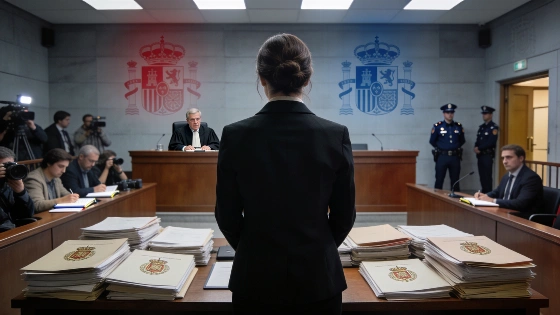
Leticia de la Hoz, lawyer for Koldo García, denies receiving funds from PSOE or offering bribes. The case exposes tensions over alleged cash deliveries and political interference in Madrid.
Leticia de la Hoz, the lawyer who represented Koldo García in the high-profile 'case mascarillas' before Spain's Supreme Court, has firmly denied that the PSOE financed her legal defense or that she ever offered a bribe to influence testimony. Her statements came during her appearance as a defendant at the Audiencia Nacional, where she faces allegations linked to the so-called Leire Díaz case. The controversy centers on claims by businesswoman Carmen Pano, who accused De la Hoz of attempting to sway her testimony regarding alleged cash deliveries at the PSOE headquarters on Calle Ferraz.
According to judicial sources, De la Hoz rejected all accusations, insisting that she neither received payments from the party nor acted on its behalf. She described Pano's statements as false and motivated by personal revenge, suggesting that Pano sought to secure a commission from an irregular hydrocarbons deal. The judge, Santiago Pedraz, summoned De la Hoz after the Guardia Civil's Central Operative Unit (UCO) reported indications that she had participated in up to four meetings where a bribe was allegedly proposed to Pano in exchange for altering her judicial testimony.
Pano, in her own testimony, claimed she delivered bags containing €90,000 in cash to the PSOE headquarters and alleged that De la Hoz offered her sums ranging from €50,000 to €250,000 to change her account. Pano asserted that the offer was made on behalf of someone within the PSOE, aiming to protect former Transport Minister José Luis Ábalos and his advisor, Koldo García. De la Hoz, however, categorically denied these claims, maintaining that she never worked for the party, directly or indirectly, nor received any compensation from it.
De la Hoz provided documentation to the court to support her version, stating that Pano and her associate Álvaro Gallego contacted her office in February 2025 to request mediation in the sale of several hydrocarbon companies. She explained that her firm declined involvement after discovering one of the companies was implicated in VAT fraud. De la Hoz further alleged that it was Pano and Gallego who demanded a €10,000 advance commission for a potential sale, not the other way around.
The case has drawn attention due to its overlap with previous legal battles involving PSOE-linked figures. Notably, the legal and political fallout echoes earlier courtroom tensions, such as those described when Leticia de la Hoz faced public scrutiny after her client's sentencing in the mask procurement scandal—an episode detailed in reports like coverage of the Supreme Court scene involving Koldo García's lawyer.
Spain's Audiencia Nacional continues to investigate the broader network of alleged irregularities surrounding pandemic-era contracts and political connections. The involvement of high-profile legal professionals and business intermediaries has kept the spotlight on the intersection of politics, justice, and business in Madrid. The case also highlights the role of the Guardia Civil's UCO in uncovering potential evidence of bribery and witness tampering, underscoring the ongoing scrutiny of political party finances and judicial integrity in Spain. As proceedings advance, the outcome may influence future protocols for legal representation and party funding transparency, especially in cases involving public officials and sensitive political contexts.