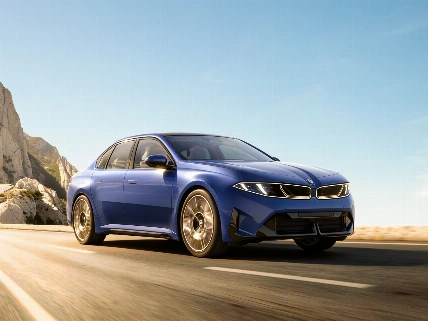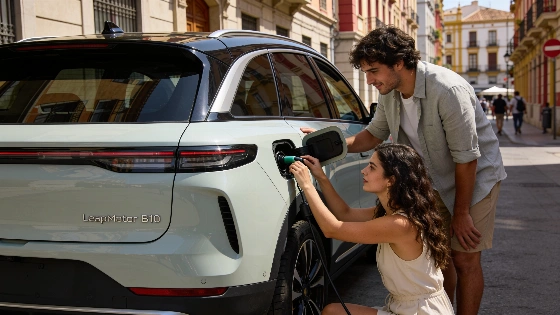
The Leapmotor B10 ranked among Spain’s most popular fully electric cars in July 2026, outpacing many established brands and challenging expectations for Chinese automakers in Europe. It logged 444 new registrations, making it the country’s second most popular electric model that month, information from independent registration data. Auto industry aggregators confirmed the figure.
The B10’s sales surge is part of a broader story of rapid global growth. Leapmotor has produced a combined 300,000 units of its B01 and B10 models in just 18 months, a pace that has caught competitors off guard. The company announced the production basic stage, while industry sources distinguish total production from actual sales.
The B10 alone has already surpassed 60,000 international sales, with more than 10,000 units sold outside China in August. Company data cited by Google/SpainAuto indicates no previous Leapmotor model has reached such international volumes this quickly. Independent sources put Leapmotor’s total overseas sales at 105,000 vehicles for the first eight months of 2026, more than double the previous year’s figure, though the numbers are not broken down by model or country.
Spain isn’t the only European market where the B10 is gaining traction. Leapmotor says the B10 was the best-selling compact electric SUV from a Chinese manufacturer in basic markets, including Germany, Italy, France, Belgium, the Netherlands and Poland, in the first half of 2026. In August, the B10 again led Spain’s electric C-SUV segment, with 350 new registrations, and ranked third among all electric cars. Information from industry statistics, the brand recorded 4,431 registrations in Spain during the first eight months of 2026, triple the number for the same period in 2025.
Price is a major factor behind the B10’s momentum. In China, the B10 and B01 start at about 100,000 yuan, roughly 12,885 euros, while European prices are higher because of taxes and logistics. In Europe, the B10 comes with 56.2 kWh and 67.1 kWh battery options, offering WLTP ranges of 361 and 434 km, respectively. Technical specifications databases list German prices from around 29,900 to 32,900 euros.
Leapmotor’s August delivery figures show the scale of its ambitions. The company shipped 103,129 vehicles worldwide that month, up 80.7% year-on-year and marking its second consecutive month above 100,000 units. In China, the B10 accounted for 8,831 deliveries in August, while the B01 added another 5,009. Industry reports show Leapmotor’s registrations in Europe rose 526.7% in the first half of 2026, reaching 48,261 units.
While many Chinese brands focus only on exports, Leapmotor is building a global manufacturing network. The company already has plants in China, Myanmar, Indonesia and Malaysia, and is advancing European production plans with Stellantis. French automotive media report that local assembly of the B10 at the Stellantis plant in Zaragoza, Spain, is expected to start by late 2026 or early 2027, with projected annual capacity of about 45,000 vehicles. The move is expected to cut costs and speed deliveries for European customers.
This expansion comes as European buyers show more interest in affordable electric cars. The B10’s rapid rise echoes disruption in other sectors, including the impact of products like the Beauer X8 caravan, as reported earlier.
Leapmotor’s growth signals a shift in Europe’s electric vehicle market. Established brands face new competition on price and technology, while the pace of change tests how quickly they can adapt to local markets. The B10’s success in Spain is part of a broader trend. As Leapmotor strengthens its presence and ramps up local production, European automakers will need to offer better value and innovate faster.