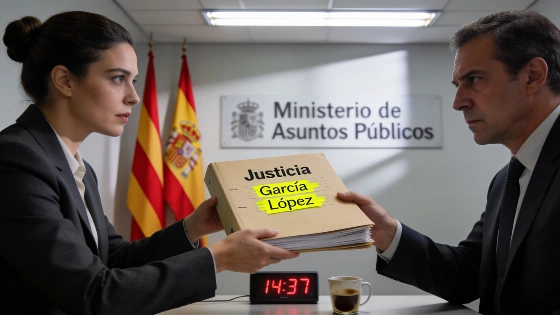
Leire Díez delivered a large dossier with compromising reports on Spain’s justice system to Alejandro Torrús, close adviser to Minister Pablo Bustinduy. The package included a central report against anti-corruption prosecutor José Grinda.
Leire Díez, a figure with deep ties to the PSOE, delivered a substantial package of sensitive documents to the Ministry of Social Rights, Consumption and Agenda 2030. The handover took place during a meeting with Alejandro Torrús, the communications director and trusted aide to Sumar minister Pablo Bustinduy. According to information confirmed by Torrús, Díez presented a collection of reports that raised serious questions about the functioning of Spain’s justice system, with a particular focus on anti-corruption prosecutor José Grinda.
The documentation, described as extensive and filled with names and incidents, was not limited to a single report. Among the materials, the most prominent was a dossier targeting José Grinda. This report, co-authored with journalist Patricia López before her passing in December, alleged the deletion of evidence in judicial files by Grinda and a Guardia Civil unit led by Lieutenant Colonel Basilio Sánchez Portillo. The presence of Grinda’s name was a recurring theme in the materials, which, according to sources, were part of a broader effort to influence ongoing legal proceedings.
Torrús acknowledged receiving the documents but stated he did not review them in detail, citing the volume and the ministry’s workload. Despite this, the exchange was significant enough to prompt follow-up messages from Díez, who inquired whether the materials had been examined and if further information was needed. The communication, evidenced by WhatsApp messages, underscores the centrality of these reports in Díez’s outreach to the ministry.
The delivery to the Sumar ministry was not an isolated event. Díez reportedly distributed the same set of documents, especially the report against Grinda, to other high-level officials. Recipients included Mercedes González, director of the Guardia Civil, and Diego Villafañe, a senior figure in the Office of the Attorney General. In each case, Díez sought to draw attention to her allegations and questioned why her complaints were not being formally processed. The Sumar ministry’s involvement stands out because the approach was facilitated by a senior aide to a government minister, highlighting the political sensitivity of the matter.
This episode adds to the ongoing scrutiny surrounding Leire Díez’s activities and her attempts to influence judicial and political processes. Her actions have previously attracted attention, as seen when she prepared to testify independently, a move that raised pressure on PSOE leadership and was covered in detail in a related report on her readiness to appear in court without party backing.
For context, Spain’s justice system has faced periodic criticism over transparency and internal conflicts, particularly in high-profile corruption cases. The involvement of senior ministry officials and the circulation of such reports reflect ongoing tensions between political actors and judicial authorities. The case also illustrates the complex channels through which sensitive information can move within the Spanish state, sometimes blurring the lines between political strategy and legal procedure.