Madrid’s M-30 started as a utopian green belt in 1929. War, dictatorship, and car culture turned it into Spain’s first full ring road, now hidden beneath the city and reshaping its landscape.
Where the M-30 once tore through Madrid, sixty hectares of new parkland now run along the Manzanares. The old highway is gone from sight. It’s buried under Madrid Río, carrying 381 million vehicles a year. That’s enough for every person on earth to cross it more than four times. City hall calls the M-30’s transformation and the Madrid Río project one of Europe’s biggest urban makeovers. The city and the river are no longer divided.
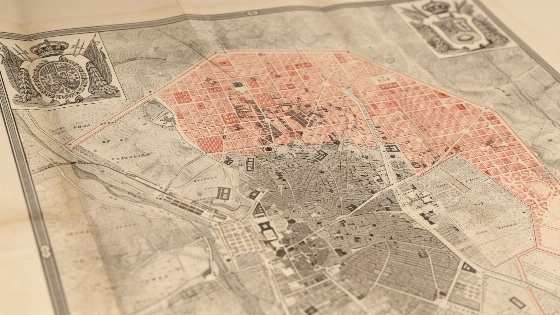
This was never the plan. Back in 1929, Secundino Zuazo and Hermann Jansen drew up a green ring for Madrid. They wanted a modern edge for the city, shaped by parks and logic. Their Plan de Extensión de Madrid was bold. It wasn’t just about roads. It was about a new way to grow. But Spain’s history had other ideas. Civil war, dictatorship, and the rise of the car changed everything. Historical sources confirm the original plan was about more than roads. It aimed to blend green space with city growth.
The completion of the M-30 ring as a continuous urban motorway only occurred in the 1970s, reflecting the era's shift toward prioritizing car traffic over earlier green urban ideals.
Work on the M-30 started and stopped through the 1940s and 1950s. Spain was rebuilding. The Manzanares stretch was the hardest. It dragged on for years. Madrid finally closed the loop in 1974. It became Spain’s first capital with a full ring road. But the green belt was gone. The M-30 had turned into a fast motorway, a monument to the car and the priorities of the 1960s. Transport reference guides still list the M-30 as one of Spain’s busiest roads. It’s a main artery for daily traffic in Madrid.
Other cities tried to copy Madrid. None matched the M-30’s mix of city life and big infrastructure. Barcelona built its ring roads for the 1992 Olympics, but took a different path. Valencia’s V-30 and Bilbao’s bypass each made their own trade-offs. Sevilla, Zaragoza, and Málaga settled for outer bypasses. They don’t have the same close connection to the city. After the M-30 was buried, its unique fit with Madrid became a talking point in urban planning. Cultural groups like Matadero Madrid have highlighted this.
The biggest change came between 2003 and 2007. City hall, led by Alberto Ruiz-Gallardón, started a huge project to bury the M-30 along the Manzanares. The numbers are huge. Forty-three kilometers of tunnels. Six kilometers running under the river. Crews dug out 3.7 million cubic meters of earth. They poured 700,000 tons of concrete. The bill hit 3.9 billion euros. That was more than three times Spain’s annual defense budget then. The city lived with years of noise and dust. Political fights over the cost were fierce. But now, the complaints have faded. Madrid Río is one of the city’s most popular neighborhoods. Home prices have jumped. Young families flock to the area.
The Madrid Río project was not just about burying a highway; it included the creation of new bridges, pedestrian connections, and recreational zones, symbolizing a shift in city policy from car-centric planning to prioritizing public space.
Zuazo and Jansen’s dream never happened as they hoped. But their idea set off changes that reshaped Madrid. The M-30 shows how city plans bend under history, politics, and daily life. The buried ring is no longer a border. It’s the city’s hidden engine. Even the most disruptive roads can, with time and vision, become part of the city again. Official and independent reports keep debating the M-30’s impact on traffic and the environment. The story isn’t over. Madrid’s future will keep wrestling with the legacy of its hidden highway.