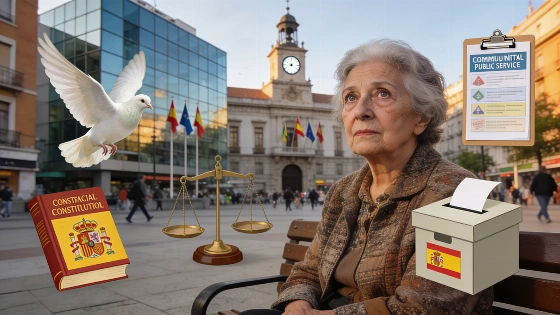
Manuela Carmena highlights how age can sharpen the mind and warns about the dangers of party-driven politics in Spain. She urges a renewed focus on public service and democratic care amid growing disillusionment.
Former Madrid mayor Manuela Carmena has raised concerns about the current state of Spanish democracy, arguing that entrenched party interests and professional politicians are undermining public trust and effective governance. In a wide-ranging reflection, Carmena pointed to her own experience and the example of renowned neurologist Rita Levi, who continued her research well past the age of 100, as evidence that the human mind can improve with age—if it remains active and engaged.
Carmena described how, during her judicial career, she encountered widespread corruption and informal payments in the Spanish legal system. She recalled her time in La Palma, where residents expressed frustration over paying taxes without seeing improvements, and in Madrid, where it was common for lawyers and court officials to negotiate extra fees for services. She noted that these practices, known as 'astillas' in the 1980s, were only curbed after being exposed in the press. Carmena emphasized that transparency and public scrutiny were essential in tackling such issues.
Turning to her political journey, Carmena admitted she was initially reluctant to run for mayor but was motivated by the prospect of offering an alternative to established party figures. She stressed that her approach to public office was rooted in listening to citizens and maintaining direct contact, often using public transport to stay connected with everyday concerns. According to Carmena, the role of mayor should be above party lines, focused on serving the city rather than advancing party agendas.
She warned that when elected officials prioritize party loyalty over the interests of their constituents, democracy suffers. Carmena argued that political parties should influence society but not dominate it, and criticized the practice of applauding proposals solely because they come from one's own party, regardless of their merit. She linked this behavior to the rise of populist and anti-system movements, suggesting that neglecting the broader public good can have destabilizing effects.
Carmena also questioned the trend of career politicians, noting that those who depend entirely on political office may lose sight of their responsibility to the public. She observed a decline in the educational background of politicians and suggested that the financial incentives of holding office can sometimes outweigh a genuine commitment to public service. The pressures of party primaries and the risk of personal attacks further discourage capable individuals from entering politics, she said.
In her view, democracy in Spain is in need of careful attention and renewal. Carmena called for a more inclusive approach, where voters are willing to support different parties at different times, and where the focus returns to serving all citizens rather than just party interests. Her comments echo broader debates about the quality of political leadership and the challenges facing representative democracy in Spain.
These concerns about the intersection of public service, mental health, and institutional trust have also surfaced in other regions. For example, recent coverage of Andalusia’s mental health plan has highlighted gaps in support for vulnerable groups, underscoring the importance of sustained attention to both social care and democratic accountability. As seen in the report on Andalusia's mental health system, the effectiveness of public institutions often depends on the integrity and responsiveness of those who lead them.
Spain’s political landscape continues to evolve, with new parties and shifting alliances challenging traditional structures. The issues raised by Carmena—corruption, party dominance, and the need for renewed civic engagement—remain central to ongoing debates about the future of Spanish democracy. Her reflections serve as a reminder that the health of democratic institutions relies not only on rules and procedures but also on the commitment and character of those entrusted with public responsibility.