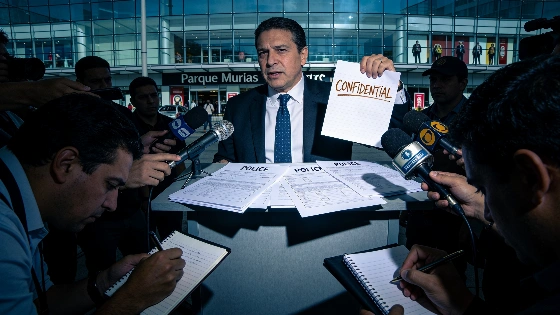
A police investigation into alleged vote-buying in Melilla has revealed possible crimes in a 2017 commercial project. The current president denies wrongdoing. The case now involves both political and business figures.
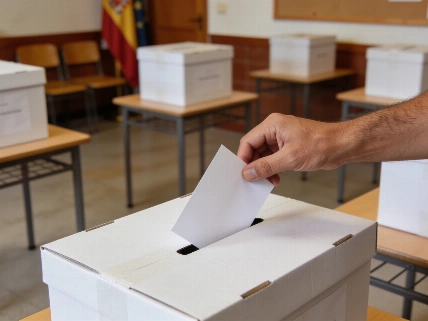
Suspicions of misconduct and misuse of public funds in the awarding of Melilla’s Parque Murias shopping centre have emerged unexpectedly from a separate investigation into alleged vote-buying during the city’s 2023 regional elections. The ongoing judicial inquiry, known as the caso Santiago-Rusadir, is led by magistrate Carmen María Perles and initially targeted the party Coalición por Melilla. However, a police search linked to the vote-buying case uncovered documents pointing to possible irregularities in the commercial project developed under the Partido Popular (PP) government led by Juan José Imbroda.
The document, found during a search of businessman Abdelmayid Belkasen Mohamed’s home, was not related to the original vote-buying probe. Instead, it referenced the construction of Parque Murias on the site of the former Valenzuela barracks, a project completed in 2017 during Imbroda’s fifth term. The Unidad de Delincuencia Económica y Fiscal (UDEF) of the National Police flagged the document to the court, suggesting potential offences including prevarication and embezzlement by members of the PP government between 2015 and 2019, as well as a later official from Coalición por Melilla.
Following the UDEF report, magistrate Perles formally opened proceedings on 7 May 2026, incorporating the new evidence into the broader investigation. According to the court order, a confidential source had provided information about an alleged fraud during the construction of Parque Murias, which the source referred to as Operación Valenzuela. The court is now considering whether to treat this as a separate case.
President Imbroda responded publicly, firmly rejecting the allegations and defending the integrity of his administration. He argued that the accusations are politically motivated attempts to unseat the PP after six terms in office. Imbroda insisted that the awarding process for Parque Murias followed proper administrative procedures and described his government as the most honest in Melilla’s history. Meanwhile, the PSOE’s local leader, Sabrina Moh, called for explanations, highlighting that land intended for public benefit ended up in private hands.
The UDEF report includes a handwritten note, discovered during the search, which investigators consider especially significant. The note’s author remains unknown, but its contents, when cross-referenced with the confidential source’s account, led police to suspect criminal wrongdoing in the project’s awarding process. The investigation now scrutinises the role of both current and former political figures in the city’s first major commercial development.
The broader vote-buying case has been ongoing for three years, with frequent police searches and a focus on the alleged use of a political party structure—specifically Coalición por Melilla—to organise and execute a scheme to secure and retain power through postal vote manipulation. From 2019 to 2023, Melilla was governed by a coalition of Ciudadanos, PSOE, and Coalición por Melilla, before the PP regained control with an absolute majority after the turbulent 2023 elections.
Melilla, as an autonomous Spanish city on the North African coast, has a complex political landscape and a history of closely contested elections. The Parque Murias project, inaugurated in 2017, was the city’s first major commercial centre and represented a significant investment in local infrastructure. The current investigation could have implications for public trust in local governance and the management of public assets, especially given the city’s strategic and economic importance.