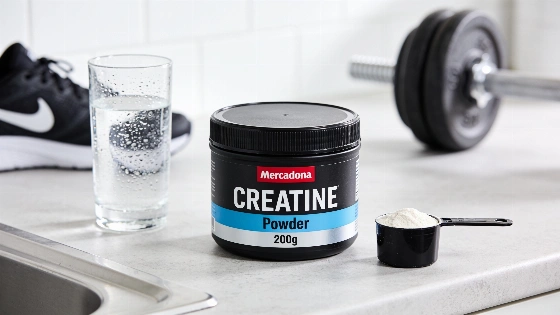
Mercadona has introduced a 200g creatine powder, produced by Ynsadiet, now available in select stores and online. Priced at €8, the supplement offers around 47 servings and is designed for adults engaged in high-intensity exercise. Its composition and pricing are already sparking debate among consumers.
Mercadona has added a new creatine supplement to its shelves, aiming directly at the growing number of customers focused on sports and physical performance. The 200-gram tub, manufactured by Ynsadiet, is now available in select supermarkets and through the retailer’s online platform, with a price tag of €8. Each serving delivers 3 grams of creatine, aligning with the European Union’s recognized threshold for improving performance in short, high-intensity exercise.
The product stands out for its neutral flavor and comes with a measuring scoop, making it easy to mix with water, milk, or other beverages. With a recommended daily dose of 4.2 grams, each tub provides approximately 47 servings—enough for about a month and a half of daily use. This brings the cost per serving to roughly 17 cents, a figure that positions Mercadona’s offering as one of the more accessible options for mainstream consumers.
Composition and Market Context
Unlike many supplements found in specialized sports nutrition stores, Mercadona’s creatine is not pure monohydrate. The formula combines creatine monohydrate, creatine phosphate, and calcium salts of orthophosphoric acid. According to the label, each 4.2-gram serving contains 3 grams of creatine, 137 mg of phosphorus, and 161 mg of calcium. This means that creatine makes up about 71% of each serving, so the entire tub contains around 143 grams of declared creatine, assuming the blend is consistent throughout.
This composition has prompted comparisons with pure monohydrate products, which remain the most studied and widely used form in the supplement market. When comparing prices, it’s important to focus on the actual creatine content rather than the total weight of the product. In this case, the cost per 100 grams of creatine is estimated at €5.60, which is competitive but not necessarily the lowest available.
What Creatine Does—and What It Doesn’t
Creatine is a naturally occurring compound produced by the liver, kidneys, and pancreas, and is also found in foods like meat and fish. About 95% of the body’s creatine is stored in skeletal muscle, where it plays a key role in energy availability during short, intense bursts of activity. The European Union allows manufacturers to claim that a daily intake of 3 grams can improve physical performance in successive bursts of high-intensity exercise, but only for adults engaged in such activities.
It’s important to note that creatine is not authorized as a remedy for general fatigue, lack of sleep, or illness-related tiredness. Its benefits are specific to certain types of physical exertion, and it should not be marketed as a universal solution for low energy.
Manufacturer and Ongoing Debate
The supplement is produced by Laboratorios Ynsadiet, a Madrid-based company with over four decades of experience in dietary supplements and natural cosmetics. The choice to blend different forms of creatine, rather than relying solely on monohydrate, has sparked discussion among consumers and fitness professionals. Some argue that pure monohydrate remains the gold standard, while others see value in the added minerals and alternative creatine forms.
For those comparing options, it’s crucial to look beyond the total package weight and focus on the declared creatine content. This approach mirrors the kind of practical scrutiny seen in other consumer markets, such as the way hidden value in home renovations can surprise even experienced professionals—a point illustrated in a recent story about a Madrid plumber who profited from recycling copper pipes during a renovation (unexpected gains from home upgrades).
Usage Guidelines and Safety
Mercadona and Ynsadiet both emphasize that users should not exceed the recommended daily dose. The supplement is not intended as a substitute for a balanced diet, should be kept out of reach of children, and is not recommended during pregnancy. According to the Spanish Agency for Food Safety and Nutrition (AESAN), a maximum daily intake of 3 grams is considered safe for healthy adults, but there is insufficient data for use in children and those with pre-existing kidney conditions should exercise caution.
Mercadona’s move brings a once-niche supplement into the mainstream, but consumers are advised to pay close attention to product composition, serving size, and their own health needs before adding creatine to their routines.