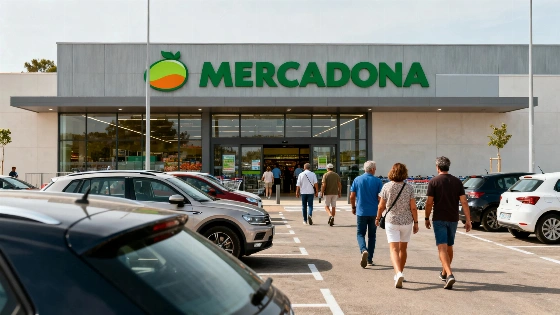
The Chain Extends Opening Hours in Spain’s Tourist Regions. Starting June 22, Mercadona will adjust the opening hours of 320 supermarkets in coastal towns: stores will stay open longer and begin operating on Sunday mornings. The new schedule runs until August 30 and is aimed at tourists and holidaymakers.
Starting June 22, 2026, the Mercadona chain is introducing new summer hours for 320 of its supermarkets, mainly located in popular coastal cities across Spain. Stores in destinations such as Cullera, Marbella, Benidorm, Sanxenxo, Salou, and Benicàssim will now be open not only for longer hours but also on Sunday mornings — a notable change for Mercadona, which is traditionally closed on this day.
As part of the summer campaign, supermarket doors will open at 9:00 a.m. and close at 10:00 p.m. without a break, which is half an hour later than the usual schedule. On Sundays, stores will be open from 9:00 a.m. to 3:00 p.m., making it easier for holidaymakers or beachgoers to shop. This decision targets tourists and seasonal residents, for whom a flexible schedule is especially important during peak holiday periods.
As Talent24h notes, the changes will affect only part of the stores — mainly in regions with high summer demand. It is recommended to check the current schedule of your nearest supermarket via Mercadona's official online service before traveling, as not all locations will switch to the new hours.
The summer schedule will be in effect until August 30, covering the entire peak tourist season. For many families and vacationers, this means extra convenience: there is no longer a need to rush before closing or wait until Monday to shop. Essentially, Mercadona is adapting to changing customer habits, recognizing that for many, vacation is not just about the beach, but also about managing daily errands at a convenient time.
In recent years, major retail chains in Spain have been increasingly adjusting their schedules to seasonal demand. In the case of Mercadona, this is a practical response to customer requests and the needs of the tourism industry.
Such measures are expected not only to increase customer loyalty but also to support economic activity in regions where there is traditionally a summer surge in demand for goods and services.