The relationship between Mohamed VI and Felipe VI remains formal, unlike their fathers’ close bond. Political roles and protocol limit direct dialogue, affecting Spain-Morocco dynamics.
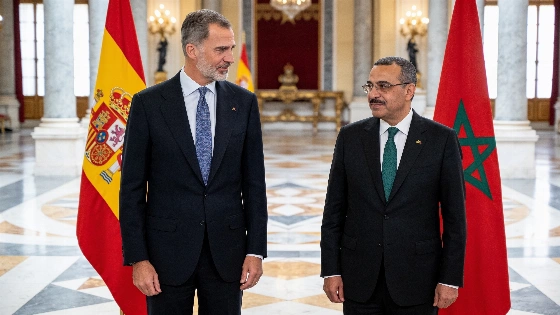
The dynamic between Mohamed VI of Morocco and Felipe VI of Spain stands in sharp contrast to the close, personal rapport once shared by their fathers, Hasán II and Juan Carlos I. While both current monarchs have known each other since childhood, their interactions as heads of state have remained strictly formal, shaped by protocol and the evolving roles of their respective monarchies. This distance has become especially evident during moments of diplomatic tension, where direct royal intervention has been notably absent.
Unlike the era when Hasán II and Juan Carlos I could rely on personal empathy to navigate bilateral disputes, the present kings operate within very different frameworks. Mohamed VI, who ascended the throne in 1999, holds significant executive power in Morocco, directly overseeing key ministries and maintaining a central role in government decisions. In contrast, Felipe VI, king since 2014, is constitutionally bound to a largely ceremonial role, with Spain’s government holding primary authority over foreign policy and crisis management.
Experts point out that this structural gap has limited the potential for direct royal mediation during critical incidents. For example, during the 2002 Perejil islet crisis, which nearly escalated into armed conflict, the lack of a personal channel between the monarchs was felt. Academic analysis suggests that, while Hasán II once proposed confidential discussions on sensitive issues like Ceuta and Melilla, such gestures have not been repeated in the current generation. Official visits and exchanges have remained formal, with little evidence of the warmth that once characterized royal relations across the Strait of Gibraltar.
Symbolic moments, such as Juan Carlos I’s visible emotion at Hasán II’s funeral in 1999, underscored the previous era’s sense of fraternity. However, since Mohamed VI’s accession, the Moroccan king has made only one official visit to Madrid, in 2000, and attended the 11-M anniversary in 2005. His international travel has been further limited by health concerns, including two heart surgeries, and his focus has shifted toward high-level government meetings rather than personal diplomacy. The most recent bilateral summit took place in Madrid in 2025, reflecting this institutional approach.
Despite the cooler royal relationship, economic ties between Spain and Morocco have grown stronger. Spain has overtaken France as Morocco’s top trading partner, with annual bilateral trade exceeding 20 billion euros. Spanish investment in Morocco remains among the highest in the region, and both countries continue to coordinate on issues ranging from migration to security. Notably, Mohamed VI is the first Moroccan monarch fluent in Spanish, a skill shared by his heir, Mulay Hasán, which facilitates official communication even as personal ties remain reserved.
While the Spanish king’s role is largely symbolic, the Moroccan monarch retains sweeping powers, including direct control over foreign affairs, defense, and religious matters. This difference in constitutional authority has reinforced the formal nature of their interactions. The shift from personal diplomacy to structured government dialogue marks a significant change in how both countries manage sensitive issues and crises.
In the broader context of royal families and their evolving roles, the Spanish-Moroccan example highlights how institutional frameworks can shape international relationships. This trend is not unique; similar patterns have been observed in other monarchies, such as the recent private gathering of the Jordanian royal family to welcome Princess Iman’s twin daughters, as reported in coverage of royal family milestones.
For Spain, the current state of royal relations with Morocco means that diplomatic and economic channels are now managed primarily at the governmental level. The days when personal bonds between monarchs could defuse crises or open new avenues for dialogue appear to have passed. As both countries navigate complex issues, from territorial disputes to trade, the focus remains on official mechanisms rather than personal intervention. This evolution reflects broader changes in the role of monarchy in modern Europe and North Africa, where tradition meets the realities of constitutional and political reform.