Morocco’s justice minister calls for dialogue on Ceuta and Melilla, insisting on historical rights. Spain firmly rejects any challenge to its sovereignty. The dispute resurfaces amid recent migration tensions.
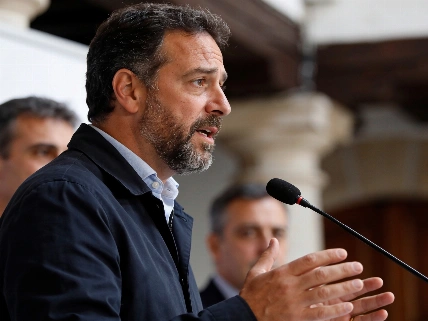
The Moroccan Minister of Justice, Abdellatif Ouahbi, has publicly renewed Morocco’s claim over Ceuta and Melilla, describing the two Spanish autonomous cities as a “historical and geographical right” of Morocco. In a televised interview, Ouahbi urged the creation of a formal dialogue mechanism with Spain to address the future of these territories, emphasizing the goal of their “return to the homeland.” His remarks come at a time when relations between Madrid and Rabat remain sensitive, especially following recent migration incidents at the border.
Spain’s Ministry of Foreign Affairs responded swiftly through diplomatic channels, reiterating that Ceuta and Melilla are Spanish cities, forming part of both Spain’s internationally recognized territory and the European Union. The ministry stressed that any alternative approach to the status of these enclaves is categorically rejected. This firm stance was echoed by Spain’s Minister of Defence, Margarita Robles, who recently stated that Ceuta and Melilla are not just Spanish, but “Spanishísimas,” underlining the government’s determination to defend their status.
Morocco’s position on Ceuta and Melilla has remained unchanged since its independence in 1956. The late King Hassan II previously called for a joint reflection group with Spain to discuss the future of the enclaves, but Madrid has consistently declined such initiatives. Ouahbi’s latest statements coincide with the implementation of a new law regulating the legal profession in Morocco, but the interview also touched on broader bilateral issues, including the aftermath of the recent migration crisis in Ceuta.
During the interview, Ouahbi renewed Morocco’s request for Spain to repatriate all unaccompanied Moroccan minors who entered Ceuta at the end of July, stating that Rabat is prepared to receive them once their identities are confirmed. The issue of migration has repeatedly tested relations between the two countries, as highlighted in recent coverage of Spain’s diplomatic efforts within the EU, such as the government’s push for stronger European support during the Ceuta border crisis, detailed in this analysis of Spain’s response to EU partners.
Ceuta and Melilla, located on the northern coast of Africa, have been under Spanish administration for centuries and are considered by Madrid as integral parts of the country. Both cities serve as key entry points to the European Union and have strategic significance for border control and migration policy. The ongoing dispute over their status continues to influence Spanish-Moroccan relations, with each new statement or incident drawing renewed attention from both governments and the wider European community. The situation remains closely watched, as any escalation could have broader implications for regional cooperation, migration management, and EU border security.