Pedro Sánchez has condemned the 'selfish' reaction of some EU governments to the Ceuta border crisis. Spain calls for urgent EU talks after Italy and others question Schengen cooperation.
Spain’s Prime Minister Pedro Sánchez has sharply criticised the reaction of several European governments to the recent migration crisis in Ceuta, describing their stance as “selfish, polarising and illegal.” In a letter to top EU officials, Sánchez accused certain member states of acting out of prejudice, misinformation, or political interest, after Italy suspended Schengen cooperation with Spain and both Finland and Denmark openly considered temporarily excluding Spain from the free movement zone.
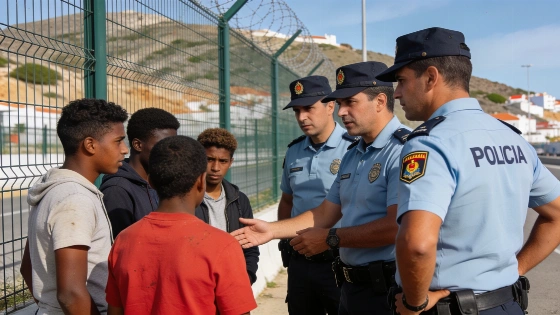
The Spanish government argues that these moves contradict European law and the principles of solidarity that underpin the EU. Sánchez’s letter, addressed to European Commission President Ursula von der Leyen, European Council President António Costa, and Irish Prime Minister Micheál Martin, who currently holds the rotating EU Council presidency, calls for an urgent meeting of interior ministers to coordinate a common response. According to Spanish estimates, more than 48,000 of the roughly 50,000 people who entered Ceuta from Morocco have already returned.
Sánchez highlighted that Ceuta is not part of the Schengen Area, making any threat of suspension legally questionable. He also cited Frontex data showing that Spain has recorded half as many irregular entries as Italy between 2021 and 2026, despite being the only EU country with a land border with Africa. The Spanish government claims it restored full border control within 48 hours, returned nearly all irregular migrants, and prevented unauthorised movement into the rest of Europe, all with minimal support from other EU states.
While most EU partners expressed solidarity and offered assistance, Sánchez noted that some used the crisis to criticise Spain’s migration policy and its recent mass regularisation. He reminded them that Spain had previously taken in migrants from Eastern Europe via Belarus in 2021 and supported Italy’s Lampedusa in 2023. Sánchez warned that the current approach of certain governments undermines Europe’s long-term interests and basic common sense, especially given Ceuta’s status outside Schengen and Spain’s relatively secure borders.
The Irish presidency of the EU Council has responded by convening a meeting of the Integrated Political Crisis Response Mechanism, with experts from member states set to analyse the situation. National representatives will also meet in Brussels to discuss the issue further. The European Commission has clarified that expelling a member state from Schengen cannot be decided unilaterally and would require a Council decision. António Costa has already publicly supported Spain’s handling of the crisis.
Recent weeks have seen growing tension within the EU over migration management. Finland’s Interior Minister Mari Rantanen accused Spain of failing to protect the Union’s external border, while Denmark’s Prime Minister Mette Frederiksen called for all options to be considered, including suspending Schengen cooperation. Sánchez, in response, reiterated that while solidarity and empathy may be optional, respect for European treaties and facts is not. For further background on the Ceuta border situation and Spain’s earlier response, see this detailed report on the initial breach and government actions.
Ceuta, a Spanish autonomous city on the North African coast, has long been a focal point for migration from Morocco to Europe. The Schengen Area, which allows passport-free travel across much of the EU, does not include Ceuta, complicating legal and operational responses to sudden migration surges. Spain’s rapid restoration of border controls and high rate of migrant returns have been cited as evidence of effective crisis management, but the lack of unified EU support has exposed deep divisions over migration policy and burden-sharing. The upcoming EU meetings are expected to test the bloc’s ability to coordinate on border security and uphold shared responsibilities among member states.