Over 40,000 people entered Ceuta from Morocco in 24 hours. Sánchez calls it a violation of Spain’s territorial integrity. The government considers new barriers and legal changes to manage the crisis.
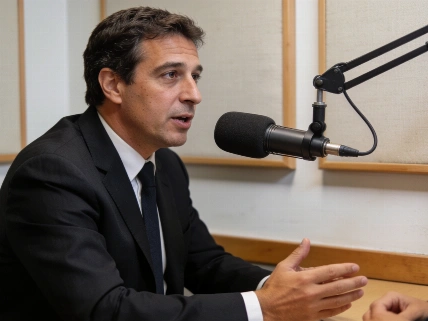
Spain’s Prime Minister Pedro Sánchez has described the mass entry of more than 40,000 people into Ceuta from Morocco as a direct violation of the country’s territorial integrity. Speaking at the Ceuta Assembly, Sánchez attributed the crisis to organized human trafficking networks and defended Morocco’s cooperation, calling the neighboring country an ally in managing the situation.
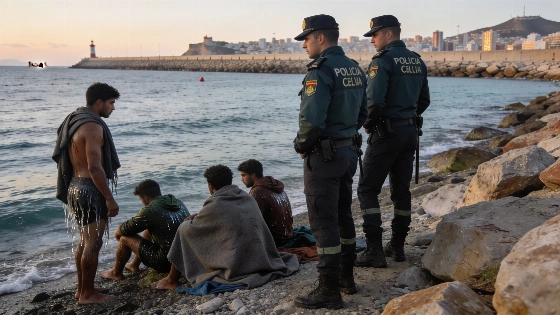
According to Sánchez, communication with Moroccan authorities has been ongoing and constructive since the start of the crisis, contrasting sharply with the breakdown seen during the 2021 border incident, when around 10,000 people crossed into Ceuta in a single episode. This time, security forces estimate that the number of arrivals in just 24 hours exceeded half of Ceuta’s population, which stands at approximately 84,000. These figures do not include the hundreds of young people who swam to the enclave in the days prior.
The Prime Minister linked the surge to a recent Supreme Court ruling, which clarified that so-called ‘hot returns’—immediate expulsions—cannot be applied to those entering Ceuta and Melilla by swimming. The court specified that expedited rejection is only legal for those attempting to cross established border barriers, such as fences. Sánchez argued that human trafficking groups have exploited this legal nuance to orchestrate the mass entry.
In response, the government is considering the deployment of floating barriers along the breakwater separating Ceuta from the Moroccan town of Castillejos. The aim is to comply with the Supreme Court’s decision while creating a visible physical deterrent to facilitate administrative repatriations at the border. Sánchez also indicated that legislative changes are under review to streamline the repatriation process.
The influx has placed significant pressure on local authorities. Ceuta’s mayor-president, Juan Jesús Vivas, who has led the city since 2001, warned of a state of collapse and called for a forceful and immediate response from Madrid. On Thursday, Vivas requested the activation of a national emergency, but the Interior Ministry stated that such a measure is reserved for natural or technological disasters, not migration crises.
During the 2021 crisis, Sánchez pledged to restore border control swiftly and assured that Ceuta’s security would be guaranteed by all necessary means. He again emphasized the importance of maintaining strong relations with Morocco, describing it as a partner and friend of Spain.
The diplomatic context remains complex. In 2021, tensions with Rabat escalated after the leader of the Polisario Front, Brahim Gali, received medical treatment in Spain, prompting Morocco to relax its border controls. The following year, Spain shifted its position on Western Sahara, supporting Morocco’s autonomy proposal as the most credible solution. This move resolved the dispute with Morocco but triggered a new rift with Algeria, which suspended its friendship treaty and froze trade with Spain. Only last week did Sánchez visit Algeria to agree on reactivating cooperation and increasing gas supplies, with both governments planning a high-level meeting in October.
Meanwhile, the Spanish parliament’s Justice Committee recently approved granting Spanish nationality to Sahrawis born when Western Sahara was a Spanish province, a decision supported by the PSOE and its allies, with the PP abstaining and Vox voting against.
The current crisis in Ceuta surpasses the scale of previous incidents. As highlighted in a recent report, emergency services have already been stretched by earlier waves of arrivals, with Red Cross teams providing urgent assistance to exhausted young migrants. The situation now presents new challenges for Spain’s border management and its diplomatic relations in North Africa.
Ceuta, a Spanish autonomous city on the North African coast, has long been a focal point for migration from Morocco and sub-Saharan Africa. The enclave’s unique geography—bordered by Morocco and the Mediterranean—makes it a frequent entry point for those seeking to reach Europe. Spain’s approach to border control in Ceuta and Melilla has often involved a combination of physical barriers, bilateral agreements, and legal measures. The recent Supreme Court ruling and the current crisis may prompt further changes in both policy and infrastructure, as authorities seek to balance humanitarian obligations with border security.