Morocco has secured renewed support from the United States and Israel for its autonomy plan in Western Sahara. The three countries will deepen cooperation on security, trade, technology and diplomatic ties.
Morocco has secured a new diplomatic platform with the United States and Israel that backs its sovereignty claim over Western Sahara and expands security cooperation. The joint declaration was signed in New York on 16 September 2026, as Rabat faces the Ceuta crisis and prepares for legislative elections on the 23rd. Washington and Israel have placed support for Morocco’s autonomy proposal at the centre of their trilateral partnership.
The declaration says the three governments intend to strengthen cooperation on the international stage. It also highlights the opportunities created by Morocco and Israel’s diplomatic normalisation in December 2020, a process promoted by the United States through the Abraham Accords.
The declaration sets out plans to restore direct flights between Morocco and Israel by the end of 2026, alongside a deeper upgrade of bilateral diplomatic ties.
For Rabat, the wording matters because it moves the Western Sahara dispute further away from the referendum model defended by the Frente Polisario. The text presents Morocco’s autonomy plan as the urgent route forward and says any other option would merely prolong the current stalemate.
The position is not new for either partner. The United States formally recognised Moroccan sovereignty over the territory in 2020, while Israel did so in 2023. The joint statement gives that backing a single diplomatic framework and links it directly to cooperation between the three governments.
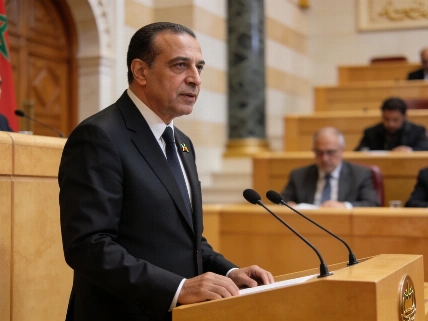
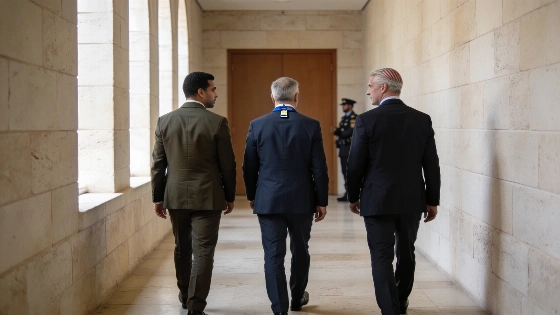
Morocco’s Foreign Minister Naser Burita signed the declaration alongside Israel’s Gideon Saar and the United States representative to the United Nations, Mike Waltz. The three officials reaffirmed their commitment to the Abraham Accords and praised Donald Trump as the leader who promoted the understanding between Israel and several Arab states during the final stage of his first term.
The Frente Polisario condemned the declaration through Sahara Press Service, describing the position adopted by Morocco, the United States and Israel as hostile and illegal. Its reaction underlines that the trilateral statement strengthens Rabat’s diplomatic position but does not resolve the dispute or secure the agreement of the Sahrawi side.
Security is the most concrete pillar of the arrangement. The declaration also covers trade, economic relations, air links, technology and innovation, while the reported plans extend to finance, water, agriculture and energy. It calls for agreements on investment protection and the avoidance of double taxation to be completed by the end of 2026. The military relationship has already produced measurable changes in North Africa. According to the latest report from the Stockholm International Peace Research Institute, Morocco has overtaken Algeria in arms purchases and is now Africa’s largest weapons importer.
The United States supplies 60% of Morocco’s weapons acquisitions. Israel accounts for 24% after restoring diplomatic relations and signing a defence cooperation agreement in 2021, while France provides 10%. Joint exercises such as African Lion, organised by the United States in southern Morocco, form part of the same security framework.
The Western Sahara file is also being reshaped at the United Nations. The Security Council reviewed the role of the United Nations Mission for the Referendum in Western Sahara, known as Minurso, 35 years after its deployment. Its personnel and resources have already been reduced, and the mission now mainly observes conditions on the ground without the power to intervene.
Morocco controls 80% of the territory, while the Frente Polisario controls the remaining 20% from exile in Algeria. Negotiations held in Manhasset between 2007 and 2008 and in Geneva between 2018 and 2019 produced no settlement. Talks launched in Madrid last February with United States involvement, United Nations mediation and the participation of Algeria and Mauritania stalled in May after Washington shifted its attention to the conflict with Iran in support of Israel.
Sources in El Aaiún who are in contact with the UN mission say Washington wants a substantial reduction in Minurso personnel and its annual cost. The mission’s maintenance reached 68 million dollars last year, while several contracts for staff in El Aaiún ended without renewal. Its mandate is due for a strategic review before 31 October.
The diplomatic push also reaches the Strait of Gibraltar. Burita said Morocco should help develop an international code of conduct for states bordering straits and maritime passages, arguing that Rabat carries direct responsibility for managing and securing a route used by one vessel every five minutes. The reference adds a maritime dimension to a partnership already built around territory, arms and regional influence.
The agreement goes beyond a ceremonial declaration. Washington and Israel are consolidating Morocco’s position on Western Sahara, while Rabat presents itself as a security actor linking Africa, the Atlantic and the Mediterranean. Against the background of the Ceuta crisis and the earlier Ceuta coverage, the message is direct: Morocco is using its diplomatic, military and geographic assets together. The alliance does not settle the dispute with the Frente Polisario, but it strengthens the Moroccan formula and leaves Minurso with a narrower role on the ground.