Flights to and from Malta were cancelled and delayed after volcanic ash from Mount Etna reached the island. The disruption hit during the busiest period for tourism. Passengers faced uncertainty as airlines adjusted schedules.
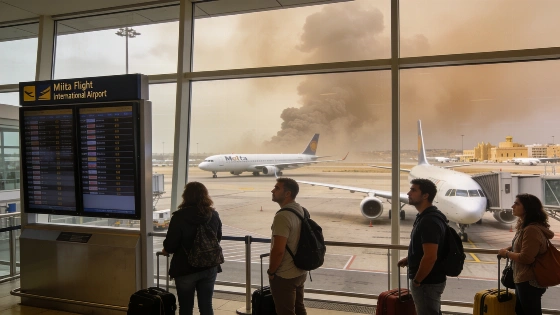
Malta International Airport faced a wave of cancellations and delays on Tuesday after a dense ash cloud from Sicily's Mount Etna drifted south, disrupting air traffic at the height of the tourist season. The airport, located roughly 220 kilometers from the volcano, reported that 19 flights had already been cancelled by mid-afternoon, with several others experiencing significant delays. The situation developed rapidly as volcanic activity intensified, sending ash across the Mediterranean and forcing airlines to adjust their operations.
According to airport representatives, the disruptions were directly linked to renewed eruptions at Mount Etna, which began last week and have already led to the closure of Catania Airport, one of Italy's busiest hubs. On Tuesday, Catania Airport extended its suspension of all arrivals and departures until at least 11:00 a.m. local time on Wednesday, further complicating travel plans for thousands of passengers in the region. The ongoing volcanic activity has created a ripple effect, with Malta now experiencing the consequences as ash clouds continue to move unpredictably.
Passengers scheduled to fly from both Malta and Catania were urged to check the latest updates before heading to the airport, as airlines worked to manage the evolving situation. The timing of the disruption, coinciding with peak summer travel, has heightened the impact on tourism and local businesses. Malta International Airport used social media to keep travelers informed, emphasizing the need for flexibility and patience as conditions change.
Such large-scale flight disruptions are not unprecedented in southern Europe. For example, a recent power outage at Barcelona-El Prat Airport also led to widespread delays and cancellations, highlighting the vulnerability of air travel to both natural and technical incidents.
Mount Etna is recognized as the most active volcano in Europe, with eruptions that frequently affect airspace and transport in the Mediterranean. The current episode underscores the challenges faced by airports and airlines in responding to sudden environmental hazards. While authorities continue to monitor the situation, travelers are reminded that volcanic ash can pose serious risks to aircraft safety, often requiring rapid operational changes. The incident serves as a reminder of the interconnectedness of European air travel and the importance of real-time communication between airports, airlines, and passengers during emergencies.