A British interpreter’s statement has cast doubt on Jonathan Andic’s version of events surrounding his father’s fatal fall in Montserrat. The new testimony raises questions about omissions in his defense and intensifies scrutiny of the case.
A surprise witness has emerged in the investigation into the death of Isak Andic, founder of Mango, intensifying scrutiny on his son Jonathan Andic. The case, centered on a fatal excursion to Montserrat in December 2024, has taken a new turn after a British interpreter revealed details that contradict Jonathan’s previous statements to police and the court.
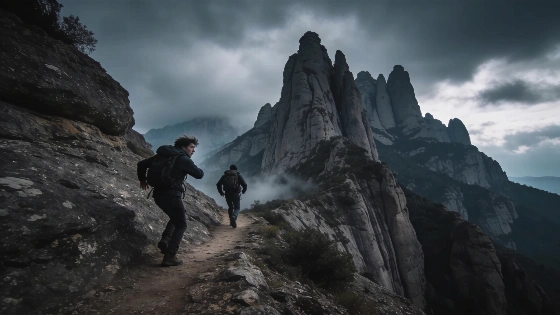
According to the latest developments, the interpreter, identified as Jo, voluntarily approached the Mossos d’Esquadra in late June 2026. She explained that she had accompanied Jonathan on a reconnaissance walk along the Camí de les Feixades on December 7, just a week before the fatal incident. This detail had not been disclosed by Jonathan in any of his testimonies, despite being questioned multiple times about his visits to the area prior to his father’s death.
Jo’s involvement came through her occasional work as an English translator and assistant for Julia Lüderwaldt, a controversial family therapist who had been treating the Andic family. Lüderwaldt had asked Jo to help select a challenging mountain route for a therapy session between Jonathan and his father, who had a history of intermittent conflict. The chosen path, leading to the Montserrat monastery, was intended to serve as a setting for an “extreme confrontation” exercise, according to Jo’s account.
During their walk, Jo stated that Jonathan made no mention of his father or their relationship, only commenting that the route seemed suitable and that he might return with his niece. This omission is now seen as significant, as Jonathan had previously told investigators that he had scouted the route alone and that it had been recommended by friends. He also claimed that his father’s demanding nature required him to prepare excursions thoroughly.
The judge overseeing the case, Raquel Nieto, had already cited Jonathan’s prior visits to the Camí de les Feixades as one of several factors justifying his provisional detention. The Mossos believe Jonathan visited the site on December 7, 8, and 10, though his defense disputes the number of visits and the evidence for each. The new testimony from Jo, however, directly challenges the narrative presented by Jonathan and his legal team.
Jonathan Andic, who was initially treated as a witness, became a suspect after inconsistencies and perceived falsehoods in his statements. He was later arrested and charged with homicide, though he maintains his innocence and insists on a positive relationship with his father. The defense argues that Jonathan omitted mention of Jo to protect her from involvement, and that he was never directly asked about being accompanied during his scouting trips.
The interpreter’s statement has also renewed attention on Julia Lüderwaldt, who remains a witness in the case. Judicial sources note that the new evidence adds further pressure on Jonathan, who was released on bail of one million euros in May. The defense has responded by urging caution in interpreting uncorroborated procedural information and highlighting what they describe as notable inaccuracies in Jo’s account.
This development comes amid a broader context of high-profile legal cases in Spain, where the role of unexpected witnesses and procedural details can significantly alter the course of investigations. For example, in another recent case, a Santander court moved forward with charges after new evidence surfaced in an attack on PSOE headquarters, underscoring the impact that fresh testimony can have on judicial proceedings.
Montserrat, a mountain range near Barcelona, is a popular destination for both tourists and locals, known for its challenging trails and religious significance. The Camí de les Feixades, while not considered technically difficult, includes sections with steep drops, making safety a concern. The Andic case has drawn attention not only because of the family’s prominence in Catalonia’s business community, but also due to the unusual circumstances surrounding the fatal fall. As the investigation continues, the credibility of witness statements and the handling of key details remain central to the outcome.