ORCAM will open its 2026-2027 symphonic season with Mahler's Third on 6 October in Madrid. Alondra de la Parra will lead the orchestra, the Coro de la Comunidad de Madrid and the Pequeños Cantores de la ORCAM at the Auditorio Nacional.
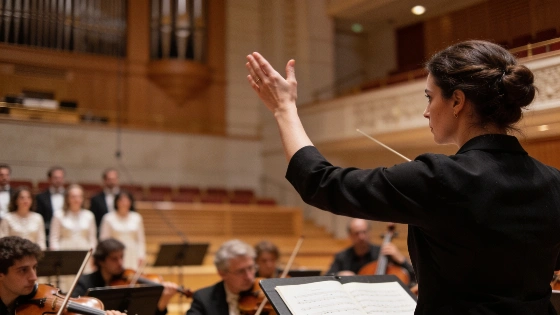
On 6 October, Gustav Mahler's Symphony No. 3 is scheduled to open the Orquesta de la Comunidad de Madrid's 2026-2027 Symphonic Cycle at Madrid's Auditorio Nacional de Música. The performance will bring together the ORCAM orchestra, the Coro de la Comunidad de Madrid and the Pequeños Cantores de la ORCAM. Alondra de la Parra will conduct the symphony, which moves from the natural world toward a spiritual dimension.
Operabase lists the same work and venue as "Mahler's Third at Auditorio Nacional de Música", but gives 21 October 2026 at 19:30 instead of 6 October. The exact date and full cast should therefore be checked against the official ORCAM and Auditorio Nacional calendars. The discrepancy matters.
The concert will begin at 19:30 in the Sala Sinfónica. Mezzo-soprano Jennifer Johnston will also appear. Ana González will direct the Pequeños Cantores, while Javier Carmena will lead the Coro de la Comunidad de Madrid.
In autumn 2026, Alondra de la Parra is also reported as making her debut as director of the Teatro Auditorio San Lorenzo de El Escorial, placing her in a prominent role in Madrid’s cultural season.
Mahler's Third is not a short seasonal opener. Mahler wrote it between 1895 and 1896 as a large work about different dimensions of existence. Nature comes first. The music then moves toward divinity.
Its structure is unusually clear and demanding.
Mahler divided the symphony into two parts and six movements. The first part contains only the opening movement. The second brings together the remaining five. María del Ser wrote the programme notes. She holds a doctorate in Music Education from UCM and works as an informer at Radio Clásica, RNE. Her notes describe Mahler's method as an attempt to build a world with every technical resource available to him.
Beckmesser’s September 2026 musical coverage also links ORCAM’s Mahler programme with the 20th anniversary of the Teatro Auditorio San Lorenzo de El Escorial. The detail places the Madrid performance within a broader autumn programme involving the orchestra and the venue.
The score draws on texts from Des Knaben Wunderhorn by Achim von Arnim and Clemens Brentano. It also uses the final chapter of the third part of Thus Spoke Zarathustra by Friedrich Nietzsche. These sources give the symphony a vocal and philosophical side alongside its orchestral scale.
The performance will last approximately 90 minutes. It will have two sections and a 15-minute interval. The sixth movement will close the concert: Lento. Sereno. Con sentimiento. Lo que me cuenta el amor.
The event is part of a wider Spanish cultural calendar that also includes the Goya ceremony announcement. In Madrid, ORCAM has chosen a work that needs a large force on stage, including the choir and young singers.
The concert is titled La creación de un todo. It will take place at the Auditorio Nacional de Música at Príncipe de Vergara 146 in Madrid. The season will open with a complete Mahler symphony rather than a short introductory programme. That is a substantial start.