Three simultaneous wildfires forced the evacuation of more than 10,000 people in Madrid. Authorities cleared Aldea del Fresno and parts of Villa del Prado. The regional government requested national intervention as fires spread rapidly.
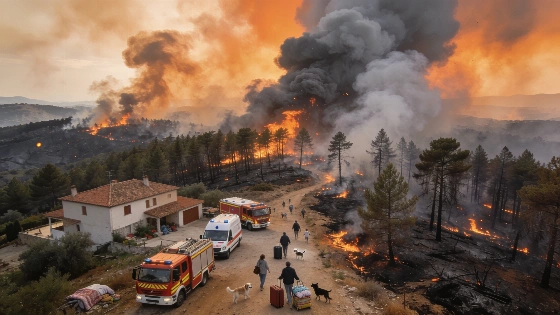
More than 10,000 residents in the Madrid region were evacuated overnight as three separate wildfires swept through the southwest, forcing authorities to clear entire communities and cut off key roads. The most severe incident led to the complete evacuation of Aldea del Fresno, while the urbanisation El Encinar del Alberche in Villa del Prado suffered extensive property damage. The fires, which began in neighbouring provinces, quickly crossed into Madrid territory, overwhelming local emergency services and prompting urgent calls for national assistance.
Madrid’s regional president, Isabel Díaz Ayuso, formally requested the central government to declare the highest emergency level—operational situation 3—under the State Civil Protection Plan. This move would transfer command of firefighting operations to national authorities. Ayuso highlighted the scale of the crisis, noting that local teams, together with the Military Emergency Unit (UME), were risking their lives to protect residents and property as the fires raged beyond the region’s capacity to contain them.
Residents in affected areas received emergency alerts instructing them to remain indoors with windows and doors closed. Many, like 76-year-old Antonio López, spent the night anxiously monitoring official updates, recalling past tragedies and the unpredictable nature of wildfires. In Cenicientos, a nearby village, the local mayor coordinated efforts from an improvised command post, as the Almorox fire—originating in Toledo—consumed over 890 hectares, including 600 within Madrid’s borders. The rapid advance of flames left little time for preparation, with officials describing the fire’s spread as explosive.
Evacuation efforts were complicated by poor visibility and a lack of signage, forcing authorities to organise buses for safe transport. Many evacuees brought pets and essential belongings, leaving behind homes and vehicles as flames approached. The devastation in El Encinar del Alberche was stark: charred houses, scorched vehicles, and pine forests reduced to ash. Local leaders compared the scene to a war zone, underscoring the emotional and logistical toll on communities suddenly uprooted.
While the fires were brought under partial control, officials warned that high temperatures and shifting winds could reignite danger in the coming days. The regional government began assessing the extent of property and land losses, with temporary shelters set up in municipal facilities for displaced residents. Ayuso visited the affected areas, pledging support for those who lost homes and livelihoods and emphasising the need for continued vigilance as conditions remained volatile.
Madrid’s experience echoes other recent emergencies in Spain, where rapid-onset fires and explosions have tested local response capabilities. For example, a major gas explosion and fire at a Barcelona metro construction site earlier this year highlighted the challenges of managing simultaneous crises and the importance of coordinated emergency planning.
Spain’s wildfire season has grown increasingly severe in recent years, with climate factors and land management practices contributing to heightened risk. The events in Madrid underline the vulnerability of peri-urban areas, where residential developments border forests and agricultural land. National and regional authorities continue to review protocols and resource allocation to better prepare for future incidents, as communities across the country remain on alert during peak fire months.