Swiss passenger fined €140 for buying train ticket 17 seconds after departure. In Switzerland, a regional train passenger was fined €140 for purchasing a ticket just 17 seconds after the train departed. Instant in-app payment didn't spare him from sanctions—the automatic system makes no distinction between a late purchase and riding without a ticket.
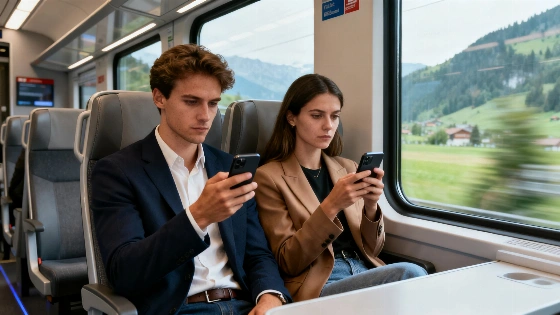
Marko and his girlfriend managed to jump onto the regional train between Solothurn and Bern at the very last moment. As the doors were closing, they were already pulling out their phones to buy tickets through a mobile app. But by the time the system issued a confirmation, the train had officially left the station—Marko's ticket was purchased 17 seconds late, and his companion’s was 32 seconds late.
A few minutes later, ticket inspectors appeared in the carriage. The couple had tickets, but the issue was the time they were issued: according to Swiss railway rules, a ticket must be purchased before the train departs. As a result, Marko was fined 130 francs (about 140 euros), while his girlfriend received a lower fine—90 francs—since she had no prior violations.
A system without exceptions
The situation left the passengers puzzled: they had paid their fares, but the automated system makes no distinction between those who are a few seconds late and those who refuse to pay on principle. As Talent24h notes, for railway companies it's crucial to avoid loopholes: if passengers were allowed to buy tickets after departure, some would wait for an inspector and only pay if checked.
According to transport authorities, annual losses from fare dodgers in Switzerland reach 200 million francs. That’s why the companies adhere to a strict policy: even the smallest delay in payment counts as a violation.
The ‘seconds trap’ and public reaction
Marco's story has reignited the debate in the country about the so-called 'seconds trap'—a situation where a passenger pays for a ticket but gets fined for being just seconds late. For many users, the difference between being slightly late and intentionally riding without a ticket is obvious, but for an automated system, this distinction disappears.
Marco, who works in mobility and supports the Los Verdes party, believes such cases undermine trust in public transport: “If we want people to choose the train, the service must be user-friendly. Stories like this only scare people away.”
The rail companies’ position
Operators explain: national rules do not allow inspectors to make exceptions or look into passengers’ motives. If the system were more flexible, abuse would become widespread. That is why even those who paid for a ticket just moments late are fined on par with fare dodgers.
In 2024, the Swiss Federal Office of Transport already called for a review of automatic sanctions, considering them outdated. Since then, technical improvements and informational campaigns have been introduced, but the problem has not disappeared entirely. The app still allows users to buy a ticket after departure, which misleads passengers: they believe their trip is paid for, but technically they are violating the rules.
How to avoid a fine
Experts advise: to avoid finding yourself in such a situation, you should purchase and confirm your ticket before the train departs. Don’t rely on the app allowing payment after departure — the system records the exact time of purchase. Even a few seconds’ delay may result in an automatic fine. In case of a penalty, it is recommended to file an appeal with a detailed explanation of the circumstances, although this does not always help.
A similar conflict between formal rules and real circumstances has already arisen in other areas: for instance, when a court in Spain ruled it unlawful to dismiss an employee for personal calls to Morocco from a work phone, since the company failed to prove employee intent (more on the topic).
Marko’s case shows: automation and digital services make transport more convenient, but sometimes turn seconds into costly mistakes. For passengers, this is a reason to pay closer attention to details, and for operators — a signal to seek a balance between control and common sense.