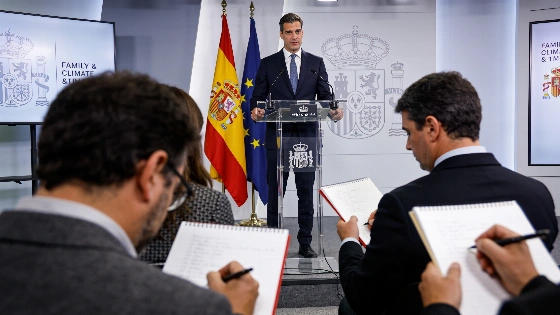
Prime Minister Pedro Sánchez addressed the media at Moncloa, shifting attention from policy to personal matters involving Begoña Gómez and David Sánchez. The session also covered wildfires and climate urgency, but family issues dominated.
At a press conference in Moncloa, Prime Minister Pedro Sánchez faced a shift in focus from government policy to personal matters, as questions centered on his wife, Begoña Gómez, and his brother, David Sánchez. The event, initially intended as a review of the political year, quickly turned to the scrutiny of Sánchez’s family, overshadowing other pressing national topics.
Sánchez began the session with a formal tone, emphasizing the need for accurate information in the face of misinformation. He addressed the ongoing wildfires in Spain, expressing support for affected families and public servants, and reiterated the government’s commitment to deploying all available resources to control the situation. The Prime Minister also highlighted the worsening climate emergency, warning that climate denial remains a significant obstacle in tackling environmental crises.
Despite these urgent issues, the briefing’s tone changed as journalists pressed Sánchez on judicial matters involving his wife and brother. He responded by distancing their identities from his own political role, underlining that Begoña Gómez and David Sánchez are professionals with independent careers. Sánchez stressed that both have built their paths through education and work, seeking to separate their personal lives from his position as head of government.
Other topics, such as corruption and housing, received only brief mentions during the session. The Prime Minister acknowledged the importance of these issues but dedicated limited time to them, focusing instead on the immediate challenges posed by wildfires and the climate crisis. He also referenced recent statements from political figures, including Maribel Vaquero of the PNV and former Prime Minister José Luis Rodríguez Zapatero, as well as the ongoing budget discussions and the possibility of cross-party agreements.
The press conference, which lasted over an hour, reflected the complexity of balancing public expectations with personal boundaries. Sánchez’s attempt to redirect attention to policy achievements, such as improvements in unemployment rates and Spain’s role in European recovery funds, was largely overshadowed by the persistent focus on his family. The session concluded with Sánchez maintaining a composed demeanor, aware that headlines would likely highlight the personal over the political.
For context, the scrutiny of political leaders’ families is not uncommon in Spain, especially when legal or ethical questions arise. The Spanish government has faced increasing pressure to address both transparency and accountability, particularly in matters involving close relatives of public officials. Meanwhile, the country continues to grapple with severe wildfires, a challenge exacerbated by rising temperatures and prolonged droughts. According to official data, Spain has experienced a notable increase in wildfire incidents over the past decade, prompting calls for stronger climate action and improved emergency response systems. The intersection of personal and political issues in high-profile press events often shapes public debate, influencing both media coverage and policy priorities.