Police and Guardia Civil in southern Spain confront armed drug traffickers daily. Officers report rising violence, lack of danger pay, and growing fear for their safety. Calls for urgent government action intensify.
Police and Guardia Civil officers stationed across southern Spain are facing a surge in armed confrontations with drug traffickers, as violence and insecurity escalate in regions like Huelva, Algeciras, and the Campo de Gibraltar. Despite the daily risks, these officers still lack the danger pay granted to colleagues in the north, a point of growing frustration among police unions and associations.
In recent months, officers have reported a sharp increase in attacks, including incidents where patrol boats were fired upon with automatic weapons. One such case off the coast of Huelva resulted in ten arrests and the seizure of six tonnes of hashish, highlighting the scale and boldness of the trafficking networks. Yet, as unions push for the south to be recognized as a Zone of Special Singularity, the Ministry of Interior maintains that current measures are sufficient, citing ongoing reinforcements and special plans.
The reality on the ground tells a different story. Many officers describe living in a state of constant alert, reminiscent of the 'syndrome of the North' once associated with anti-terror operations in the Basque Country. They avoid revealing their profession, change daily routines, and limit social contacts to protect themselves and their families. Encounters with traffickers are not limited to operations—officers often recognize them in supermarkets, schools, and local bars, with some discovering their own photos circulating in traffickers' chat groups.
Drug seizures in Huelva alone reached over 65,000 kilos of hashish in 2025, triple the amount from the previous year, according to official data. Cocaine confiscations have also surged, with 11 tonnes seized in just two months. However, officers warn that much more is slipping through, as traffickers adapt routes and methods, increasingly using fast boats and enlisting local poachers familiar with protected areas like Doñana to move drugs through hard-to-control terrain.
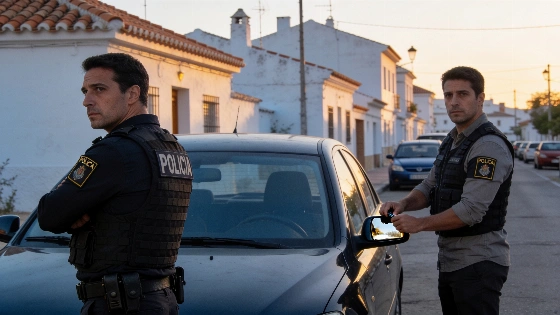
Officers now routinely wear reinforced bulletproof vests and carry equipment often purchased with their own money or confiscated from traffickers. The influx of cocaine from Colombia, falling prices, and the presence of heavily armed foreign mercenaries have transformed the landscape, making each operation potentially deadly. The economic power of the drug trade is visible in local communities, where traffickers attempt to buy influence and maintain a constant watch on police movements.
Veteran officers report that the situation has deteriorated rapidly over the past two years, with criminal groups mobilizing dozens of armed individuals for a single shipment. The withdrawal of the OCON-Sur anti-narcotics coordination body in 2022 has left local units overstretched, forcing many to abandon routine policing to focus on drug-related operations. As one officer in Cartaya put it, regular police work is being sidelined as resources are diverted to support anti-drug missions.
The psychological toll is mounting. Many officers seek private therapy to cope with the stress and fear, describing sleepless nights and a constant sense of vulnerability. The sense of isolation is compounded by the perception that the rest of Spain remains unaware of the scale of the conflict. As noted in a recent armed clash involving the Guardia Civil in Huelva, the violence is no longer hidden—it's a daily reality for those on the front lines.
Spain's southern coastline, stretching over 1,100 kilometers and dotted with navigable rivers, presents a logistical challenge for law enforcement. The combination of local knowledge, international criminal involvement, and the sheer volume of drugs moving through the region has created a parallel reality, where officers and traffickers live side by side. The call for recognition, resources, and support grows louder as the risks continue to mount.
For context, Spain remains a key entry point for drugs into Europe, particularly through Andalusia and the southern coast. The region's proximity to North Africa and established smuggling routes make it a focal point for international trafficking networks. The ongoing struggle between law enforcement and organized crime not only affects officer safety but also has broader implications for public security and the rule of law in affected communities.