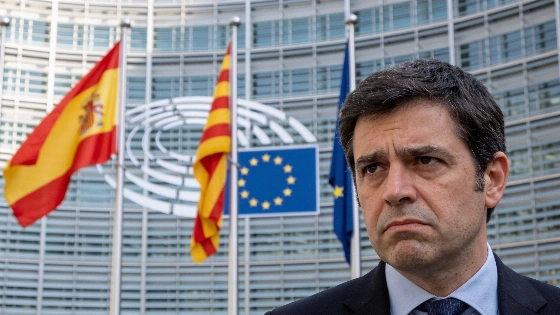
The Partido Popular acknowledges the EU court's decision on the amnesty law. However, the party sharply criticizes Pedro Sánchez for negotiating legal privileges in exchange for parliamentary support.
The Partido Popular (PP) has formally recognized the European Union Court's decision to uphold Spain's amnesty law, but the party has intensified its criticism of Prime Minister Pedro Sánchez. In a statement released after the ruling, PP leaders emphasized that their opposition is not limited to legal arguments. They insist the core issue is whether a sitting president should be allowed to negotiate legal privileges for political allies in return for securing a parliamentary majority. According to the PP, such actions undermine the integrity of the office and betray the trust of Spanish citizens.
PP representatives argue that the debate surrounding the amnesty law extends beyond the courtroom. They maintain that no president should exchange political power for immunity from prosecution, especially when it contradicts previous commitments and, in their view, the will of the majority. The party describes Sánchez's approach as morally unacceptable and claims it sets a dangerous precedent for Spanish democracy.
In its statement, the PP also points to the unresolved consequences of the separatist movement in Catalonia. The party asserts that, regardless of the court's decision, the political responsibility for the events of a decade ago remains. They highlight that Catalonia is still dealing with the aftermath of what they call a "toxic process," and stress that the amnesty law does not erase the actions or accountability of those involved in the separatist push.
The PP, which has challenged the amnesty law before Spain's Constitutional Court and organized several public demonstrations against it, notes that the EU court's ruling is limited in scope. According to the party, the decision addresses only specific questions raised by Spanish courts regarding aspects of EU law. It does not, they argue, assess the constitutionality or political wisdom of the entire amnesty measure. The responsibility for applying the law now returns to Spanish judges, who must interpret the ruling within the national legal framework.
This latest development comes amid ongoing tensions between Spain's executive and judiciary. The issue of political influence over legal proceedings has been a recurring theme in recent years, as highlighted when the former president of the Supreme Court warned about political pressure on the judiciary. The debate over the amnesty law has further fueled concerns about the separation of powers and the long-term impact on Spain's legal and political landscape.
For context, the amnesty law was introduced as part of negotiations to secure parliamentary backing for Sánchez's government. Its approval has sparked widespread debate, with supporters arguing it is necessary for political reconciliation, while critics see it as a concession that undermines the rule of law. The Constitutional Court is still reviewing the law's compatibility with Spain's constitution, and the outcome could have significant implications for future government actions and the balance of power between branches of the state.