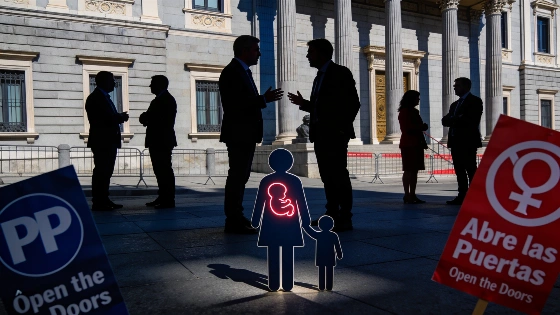
PP and Vox have shifted their abortion strategy, focusing on natality and fetal rights. New regional laws now recognize fetuses as family members, sparking feminist criticism and calls for further restrictions from anti-abortion groups.
Spain's political landscape is seeing a significant shift as the Partido Popular (PP) and Vox align on a new approach to abortion policy. Instead of direct restrictions, both parties are advancing regional laws that promote natality and grant legal recognition to fetuses, a move that has reignited debate over reproductive rights and family policy.
The most notable development comes from Madrid, where the regional government, led by Isabel Díaz Ayuso (PP) with Vox support, has passed the Ley de Reconocimiento del Concebido. This law classifies fetuses as family members from the 14th week of pregnancy, allowing families to access social benefits and tax breaks as if the child had already been born. For example, a family expecting a third child will now be considered 'familia numerosa' before birth. While the law specifies 14 weeks, statements from Ayuso and her team suggest a broader interpretation, with some officials asserting that personhood begins at conception.
This legislative trend is not limited to Madrid. Similar measures are embedded in coalition agreements between PP and Vox in regions such as Andalusia, Extremadura, Castilla y León, and Aragón. These agreements avoid explicit references to abortion but include comprehensive plans to encourage childbirth and support motherhood. Initiatives range from new family laws and fiscal incentives to public campaigns promoting the 'culture of life.' In Andalusia, the government has committed to a 'Plan Integral de Apoyo a la Mujer Embarazada' and a 'Plan de Apoyo a la Natalidad,' both designed to provide information, accompaniment, and financial support to pregnant women and families.
Feminist organizations and unions have voiced strong concerns about these developments. Critics argue that recognizing fetal rights sets a precedent that could pave the way for future legal restrictions on abortion. They also warn that framing motherhood as a state priority risks marginalizing women as political subjects and recipients of aid, especially when support is tied to traditional family structures.
Meanwhile, anti-abortion groups have welcomed the new laws but are demanding further action. Organizations like the Federación Española de Asociaciones Provida and Fundación +Vida see the recognition of fetal rights as a step forward but insist that true consistency would require eliminating public funding for abortion and legislating to protect life from conception. Vox has echoed these calls, suggesting that families who receive benefits but later choose to terminate a pregnancy should be required to return the aid.
Political analysts note that this strategy allows PP and Vox to appeal to conservative voters without risking backlash from more liberal segments, particularly women. By focusing on natality and family support rather than outright abortion bans, the parties can advance their agenda while minimizing electoral risk. The approach also resonates with nativist rhetoric, linking increased birth rates among nationals to concerns about immigration and demographic change.
According to El País, the current wave of regional legislation marks a new phase in Spain's abortion debate. While direct restrictions remain politically sensitive, the growing emphasis on fetal rights and natality policies is reshaping the legal and cultural landscape. The outcome may influence national policy, as PP leader Alberto Núñez Feijóo has signaled interest in extending Madrid's model across Spain if the party returns to power.
For context, Spain's abortion laws have evolved significantly since the 1980s, with the current framework allowing voluntary termination up to 14 weeks and under specific conditions thereafter. The recent regional initiatives do not alter these legal provisions directly but introduce new social and fiscal dynamics that could affect access and public attitudes. The debate over fetal rights and family policy is likely to remain a contentious issue in the coming years, with implications for both regional governance and national politics.