Rafael Azcona would have turned 100 on October 23. A Madrid exhibition returns to his films, cartoons and ideas, many of which still fit Spain's housing pressure and social conflicts.
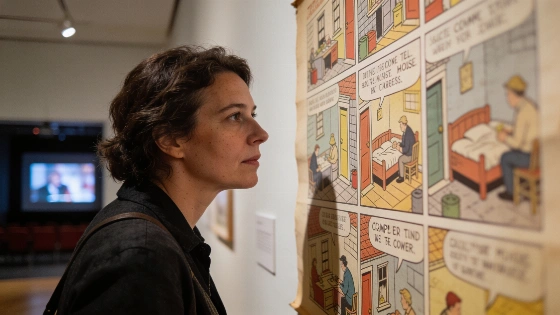
In one 1950s cartoon published in Pueblo, two builders raise towers with a roof at stomach height. A family asks whether the flats are for rent. The scene could appear in 2026.
That is the starting point for Madrid's centenary exhibition on Rafael Azcona. He would have turned 100 on October 23, but he did not reach that birthday. The problems he wrote and drew about remain easy to spot: homes that are hard to access, shops closing, crowded public transport, and protests over noise or pollution beside the "playa de Madrid".
The Bank of Spain estimates Spain’s housing shortfall at roughly 550,000 to 750,000 homes, showing how far the country is from matching demand with supply.
The joke survived.
The Bank of Spain has put Spain's housing shortfall at roughly 550,000 to 750,000 homes. Some 2026 estimates say the gap could pass 1 million homes by 2028. The figures explain why an old Azcona cartoon still feels close to the present.
The exhibition fills two corridors and a small cinema fitted with seats from the Coliseum. Visitors can watch Rafael Azcona, dos o tres cosas que sabemos de él, a 35-minute audiovisual work. David Trueba uses scenes from Azcona's films to explain his place in Spanish culture.
Azcona wrote more than 100 screenplays. He became one of the most influential and famous screenwriters in Spanish cinema. His credits include Luis García Berlanga's satires Plácido (1961) and La escopeta nacional (1978), José Luis Cuerda's El bosque animado (1987), and Fernando Trueba's Oscar-winning Belle Époque (1992). He also wrote two spaghetti westerns.
The imbalance is visible in recent figures: around 240,000 to 245,000 new households were formed in Spain in 2025, while only about 92,000 homes were completed. The gap helps explain why the housing question remains central to public debate.
His work went beyond those films. The exhibition presents him as a humorist, novelist, artist, poet, and native of Logroño. Sixteen original booklets from 1951 show his writing. The display also recalls his brief experience as a bullfighter.
Curator Bernardo Sánchez Salas cuts through the many labels. For him, Azcona was above all a narrator.
That narrator looked at society from below. He wrote about the clash between love and partnership, the divide between rich and poor, and the power of strong people over those pushed down. He also held a controversial view of existential despair. In that view, death was its logical endpoint.
These were not passing interests. They were conflicts that had not been settled. They gave his work its bleak clarity.
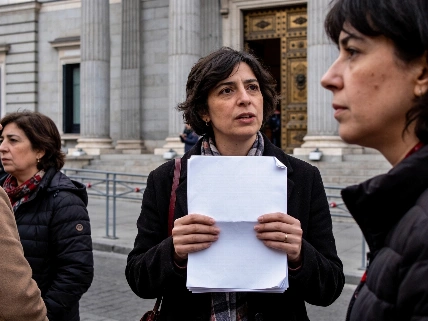
Housing makes the connection especially clear. Around 150 tents remained in Madrid's Puerta del Sol during a recent housing protest, as a recent housing camp kept evictions and access to homes in public view.
The protests grew in late September 2026. The eviction case of an 87-year-old woman became a rallying point, with AP, AFP and DW among the outlets reporting on the campaign. Azcona's cartoon does not explain those demonstrations. It gives the current dispute an earlier face.
The market tells the same story. Spain's house-price index rose 12.2% year on year in the second quarter of 2026, according to the National Statistics Institute. Prices for existing homes rose 12.9%, while new homes rose 7.4%.
Rent has climbed too. Idealista put Spain's average asking rent at €15.1 per square metre in August 2026. CNN reported, citing Idealista, that rents in Madrid had nearly doubled over the previous 10 years.
The gap is stark.
In 2025, around 240,000 to 245,000 new households formed in Spain, according to figures cited from the Bank of Spain. Only about 92,000 homes were completed.
The shortage also reaches public construction contracts. An Infobae analysis found that 129 housing tenders received no bids in 2026. Its yearly data listed 149 tenders and 255 lots without a contractor, including 128 lots that were not awarded.
The centenary programme will include a restored version of El verdugo (1963), directed by Luis García Berlanga. Sala Berlanga will screen it on Azcona's birthday as part of a cycle of eight films.
David Trueba will lead two round tables at SGAE. They are scheduled for October 19 and 26, with actors and directors who knew Azcona.
Trueba remembers Azcona as an optimist. He believed society was improving, even when it sometimes showed its claws. Trueba's description of progress producing a brutal reaction captures the tension in the exhibition.
This is not simple nostalgia.
Azcona turned housing shortages, class pressure, and daily absurdity into stories that still make sense without much explanation. The exhibition presents his pessimism as an active way of seeing. It faced reality without giving up the humour needed to keep going.