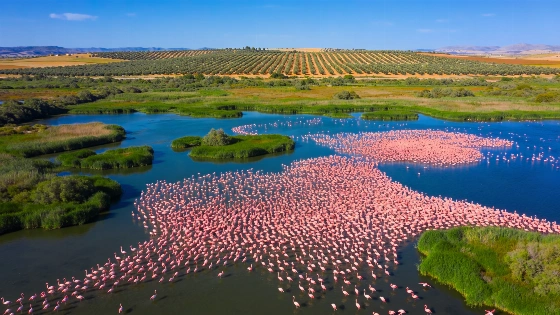
Fuente de Piedra Lagoon in Málaga sees over 30,000 flamingo pairs after a year of exceptional rainfall. The number of breeding waterbird species rises by 20%. Endangered marbled teal breeds inside the lagoon for the first time.
Fuente de Piedra Lagoon in Málaga is experiencing one of its most remarkable years on record, with more than 30,000 pairs of flamingos nesting after an exceptionally wet season. The surge in rainfall—663 liters per square meter, the fourth highest in half a century—has dramatically altered the wetland’s ecosystem, boosting both the number and diversity of waterbirds. The lagoon, the largest saline wetland of its kind in Andalusia, now hosts 23 breeding bird species, a 20% increase over the average, and is seeing rare species like the marbled teal successfully nesting inside its boundaries for the first time.
This transformation follows years of drought that left the lagoon nearly dry and forced flamingos and other birds to abandon traditional nesting grounds. In 2026, however, water levels reached up to 101 centimeters in spring—double the usual depth—creating new habitats and food sources. The increased influx of fresh water has reduced salinity, encouraging a wider range of microorganisms and algae, which in turn support a greater variety of birdlife. Species such as the white-headed duck, northern shoveler, and even the typically scarce marbled teal have benefited from these changes.
Conservation staff, led by biologist África Lupión, have observed significant shifts in bird behavior and nesting patterns. Areas once favored for nesting, like the old saltworks, are now submerged, pushing thousands of flamingos—including the only pair of lesser flamingos recorded this year—to establish colonies on newly formed islands and sandy zones. The main flamingo colony is expected to match last year’s record of nearly 34,000 pairs, with tens of thousands of chicks forming dense crèches while adults travel to other Andalusian wetlands in search of food.
The marbled teal, Europe’s most threatened duck and critically endangered in Spain, has drawn particular attention. While small numbers have bred in surrounding freshwater channels in previous years, this season marks the first time two pairs have nested within the lagoon itself. This milestone comes after years of conservation efforts, including the release of over 3,700 captive-bred individuals across Andalusia and Levante since 2021. According to the Ministry for Ecological Transition, only 172 breeding pairs were recorded nationwide in 2025, making the lagoon’s success especially significant for the species’ survival.
Other waterbirds have also responded to the wet conditions. Common coots, rarely seen breeding in saline environments, have established nests, while black-winged stilts and avocets have faced challenges as high water levels submerged their usual feeding grounds. The colony of black-headed gulls, known for their distinctive laughter-like calls, has produced hundreds of chicks, and the whiskered tern population is also thriving. The abundance of water has shifted the balance for many species, favoring some while limiting opportunities for others.
These developments at Fuente de Piedra come as Spain faces ongoing challenges related to climate variability and water management. The lagoon’s recovery highlights the impact of rainfall patterns on biodiversity and the delicate balance required to sustain threatened species. In a broader context, the situation echoes concerns raised in other parts of Spain, such as the recent Los Gallardos wildfire in Almería, where extreme weather events have also shaped local ecosystems and conservation priorities.
Fuente de Piedra’s resurgence is expected to last until late August or September, when the water is likely to evaporate. The lagoon’s future remains closely tied to rainfall and ongoing conservation work, as authorities and scientists monitor both the opportunities and risks that come with such dramatic environmental shifts. The current season stands as a rare window of abundance for one of Spain’s most important bird habitats.
Fuente de Piedra Lagoon is a protected natural reserve spanning 6.5 kilometers in length and 2.5 kilometers in width, with a catchment area covering four municipalities. Its role as a key breeding site for flamingos and other waterbirds makes it a focal point for conservation in southern Spain. The lagoon’s fluctuating fortunes underscore the importance of adaptive management and sustained efforts to protect vulnerable species in the face of changing climate conditions.