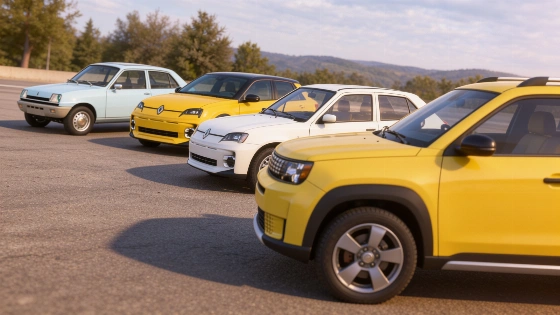
Renault 5 and Fiat Panda once defined affordable mobility in Spain. Now their electric successors are set to compete again, reviving a decades-old rivalry with new technology and familiar nostalgia.
In 2026, two of Spain’s most recognizable car names will go head-to-head again—this time as electric models. The Renault 5 E-Tech and the Fiat Grande Panda Eléctrico are set to compete for Spanish buyers, echoing a rivalry that started nearly fifty years ago when both cars first appeared on Spanish roads, back when prices were listed in pesetas.
This comeback isn’t just about new technology. Renault and Fiat are both banking on nostalgia to help sell electric cars to drivers who are still hesitant to give up combustion engines. By bringing back names that once stood for freedom and affordability, they hope to connect with buyers in a way that technical specs alone can’t.
Renault 5 E-Tech уже продаётся в Испании с официальной ценой от 23 056 евро, а некоторые комплектации доступны с поставкой всего за две недели.
The original Renault 5, launched in 1972, was a small three-door car with rounded lines and plastic bumpers built into the body—features that were unusual at the time. Made in Valladolid by FASA-Renault, the R5 quickly became a common sight in Spain and France, topping sales charts through the decade. Records show that a Renault 5 850 sold in Salamanca in late 1972 cost 108,500 pesetas. That’s about 652 euros at a straight conversion, but after adjusting for inflation, it’s closer to 7,000 or 8,000 euros in today’s money—enough to make a new car possible for many Spanish families.
Fiat’s answer came in 1980, designed by Giorgetto Giugiaro and sold in Spain as the SEAT Panda. Built in Pamplona and later Barcelona, the Panda was a response to the oil crisis: simple, light, and affordable. The most basic version started at about 265,000 pesetas, which works out to nearly 8,790 euros today after inflation—again, not far from the price of a new entry-level car in Spain now. The Panda’s goal was clear: make car ownership possible for families buying new for the first time.
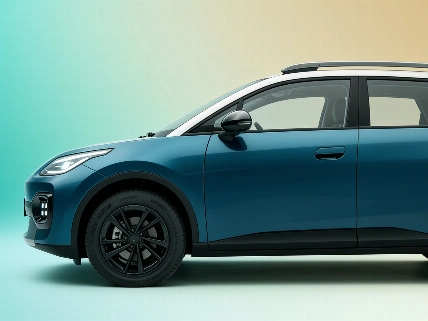
Now, both brands are reviving these names for their electric launches. The Renault 5 E-Tech keeps the original’s friendly shape and round headlights, while the Fiat Grande Panda Eléctrico brings back the boxy, practical look—this time with lithium batteries and zero emissions. After government incentives, the Renault 5 E-Tech starts at 19,151 euros and the Fiat Grande Panda Eléctrico at 17,449 euros. According to Carwow España and other Spanish automotive sources, the real starting prices without subsidies are almost identical: 25,086 euros for the Renault 5 and 25,150 euros for the Fiat Grande Panda Eléctrico. The price competition between the two is direct.
It’s striking how the inflation-adjusted prices of the originals line up with their modern electric versions. In the 1970s and 80s, a new Renault 5 or Panda cost about as much, in real terms, as their 2026 electric versions do after subsidies. The difference is what you get for the money: today’s cars are fully electric, with advanced safety and digital features. Fifty years ago, you got a basic engine under 900cc and no electronics at all.
Fiat Grande Panda Eléctrico в Испании рекламируется с промо-ценой 14 950 евро для версии POP, но эта цена действует только при условии финансирования и сдачи старого автомобиля по trade-in; без субсидий реальная цена составляет около 25 150 евро.
Renault and Fiat’s shared nostalgia strategy is deliberate. Both brands need to convince European buyers that electric cars can have personality and history, not just technical features. The Renault 5 sold over 5.5 million units in 14 years and was France’s top seller for more than a decade. The Panda, across three generations, sold over 7 million and became known for its simplicity and durability. That history is valuable in a market where trust and familiarity matter.
Still, the two cars didn’t really compete directly in their original forms. The Renault 5 was a mid-sized hatchback with bigger ambitions—it even spawned sporty versions like the Copa Turbo. The Panda was designed to be as cheap and basic as possible, aimed at a different part of the market. If you look at technical innovation and design, the Renault 5 stands out: its integrated bumpers, rounded styling, and engine options up to 93 horsepower set it apart. But for social impact and accessibility, the Panda made a bigger difference, opening up car ownership to many Spanish families and staying in production for over forty years.
Spain’s car industry is changing fast, with new companies and technologies entering the market. The return of these two names is more than just a marketing move—it’s a way to make the electric transition feel familiar. For more on how Spain’s automotive sector is shifting, see this recent report on new manufacturing trends.
In the end, the Renault 5 was the more ambitious and technically advanced car, showing that a small car could be both practical and desirable. The Panda, though, had a bigger impact on Spanish society by making new cars accessible to people who had never owned one before. As their electric successors get ready to compete in 2026, both legacy and innovation will shape what comes next. For Spanish drivers, the real benefit is having a choice between two icons, each updated for a new era.